By Ann Saphir
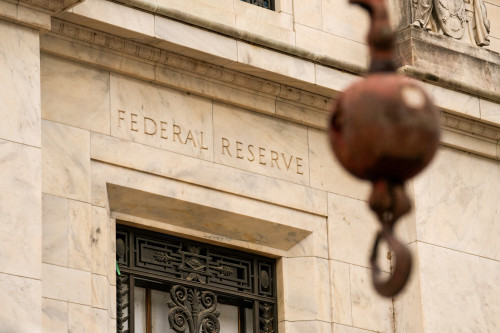
Jan 9 (Reuters) – A drop in the unemployment rate may ease concerns at the U.S. central bank about labor market weakness, with traders betting Federal Reserve Chair Jerome Powell has delivered his last interest rate cut before his term ends in May and leaving any further policy easing in the hands of whomever President Donald Trump taps as Powell’s successor.
The unemployment rate fell to 4.4% last month from a revised 4.5% in November, the U.S. Labor Department reported on Friday, even as employers added 50,000 jobs in the month. Economists polled by Reuters had forecast a gain of 60,000.
Powell led the Fed into reducing its benchmark overnight interest rate by three quarters of a percentage point last year in a bid to keep the job market from softening further, even as his more hawkish colleagues argued that doing so could slow or even imperil progress on bringing down above-target inflation.
The latest job market data appears to give the central bank a bit of breathing room to leave short-term borrowing costs where they are to keep up the pressure on inflation, as Powell last month signaled policymakers are inclined to do at least in the near term.
December’s modest job growth is “very much in line with the businesses I am talking to, which is that the low-hire environment continues,” Richmond Fed President Thomas Barkin told reporters, noting the reluctance to hire is due to uncertainty about the economy and also to higher productivity that allows firms to get by with less labor.
While it is an “uncomfortable” fact that hiring is concentrated in only a narrow set of industries, he said he feels labor supply and job growth are in reasonable balance. That view suggests he’s not in a rush to cut rates to support the job market.
Traders of rate futures tied to the Fed’s policy rate now see just a 44% chance of a rate cut by April, versus about even odds previously, with a resumption of rate cuts in June seen as the far more likely scenario.
“Inflation is still too high,” said Atlanta Fed President Raphael Bostic in a radio interview following the jobs report, calling for a laser-like focus on that part of the Fed’s mandate.
Both Bostic and Barkin are on the hawkish side of the Fed’s policy spectrum, and neither votes on monetary policy decisions in 2026.
Powell’s term as Fed chief ends on May 15. Trump, who has repeatedly attacked Powell for failing to deliver the large rate cuts the president desires, has said he has decided on a successor who supports further reductions in borrowing costs. An announcement is expected this month.
SIGNS OF SLUGGISH LABOR MARKET
The drop in the U.S. jobless rate in December “should douse the Fed’s recent urgency to backstop a weakening labor market,” said Olu Sonola, head of U.S. economic research at Fitch Ratings. “That said, the weak headline job-growth story can’t be brushed aside. Hiring is still stuck in stall speed, and job growth in the cyclical parts of the economy isn’t sending a comforting signal.”
U.S. employers added only 548,000 jobs in 2025, compared with about 2 million in 2024, the data on Friday showed. The number of those out of work and still seeking a job for more than half a year now account for more than a quarter of the unemployed, and the number of people in part-time jobs because they couldn’t find full-time work was up sharply compared with a few months ago.
“The risks are skewed toward a pick-up in layoffs ahead,” economists at Pantheon Macro noted, suggesting continued pressure for more Fed easing even while Powell is still at the central bank’s helm, perhaps as soon as March. Traders currently see less than a 30% chance of a rate cut by then.
There is plenty more data still to come before Powell steps down as Fed chief, including benchmark revisions to labor market data next month that are widely expected to show hiring was even slower than has been reported.
“The Fed will remain very open to the possibility that underlying softening could still nudge the unemployment rate and other measures of slack higher again in the next couple of months by enough to warrant a cut in March,” Evercore ISI Vice Chairman Krishna Guha wrote. “But overall we see some support here for our view that more likely than not the Fed will keep rates on hold until June, when it will deliver its first cut under the new chair.”
(Reporting by Ann Saphir, Howard Schneider, Michael S. Derby and Lucia Mutikani; editing by Philippa Fletcher, Chizu Nomiyama and Paul Simao)