Solar is not a monolith. That sounds obvious, but a lot of people treat it like one — buying or avoiding the sector as a single trade, when in reality the two largest U.S.-listed solar names are playing almost completely different games.
Enphase Energy is up roughly 55% year-to-date. First Solar is down approximately 16% over the same period. Both benefit from the same long-term tailwind. Both have institutional support. Both are growing. The gap between them is not about the energy transition — it’s about which part of the solar market is working right now, and whether that valuation difference is opportunity or warning.
Deutsche Bank just upgraded First Solar from Hold to Buy this morning, moving the price target from $245 to $272. Shares closed Monday at $233.06, suggesting roughly 17% upside to the new target, and the stock has been trying to find its footing after falling 27% in the prior month alone. That’s the kind of setup that either marks a turning point or a trap — and parsing which requires understanding what’s actually different between these two companies.
What Each Business Actually Is
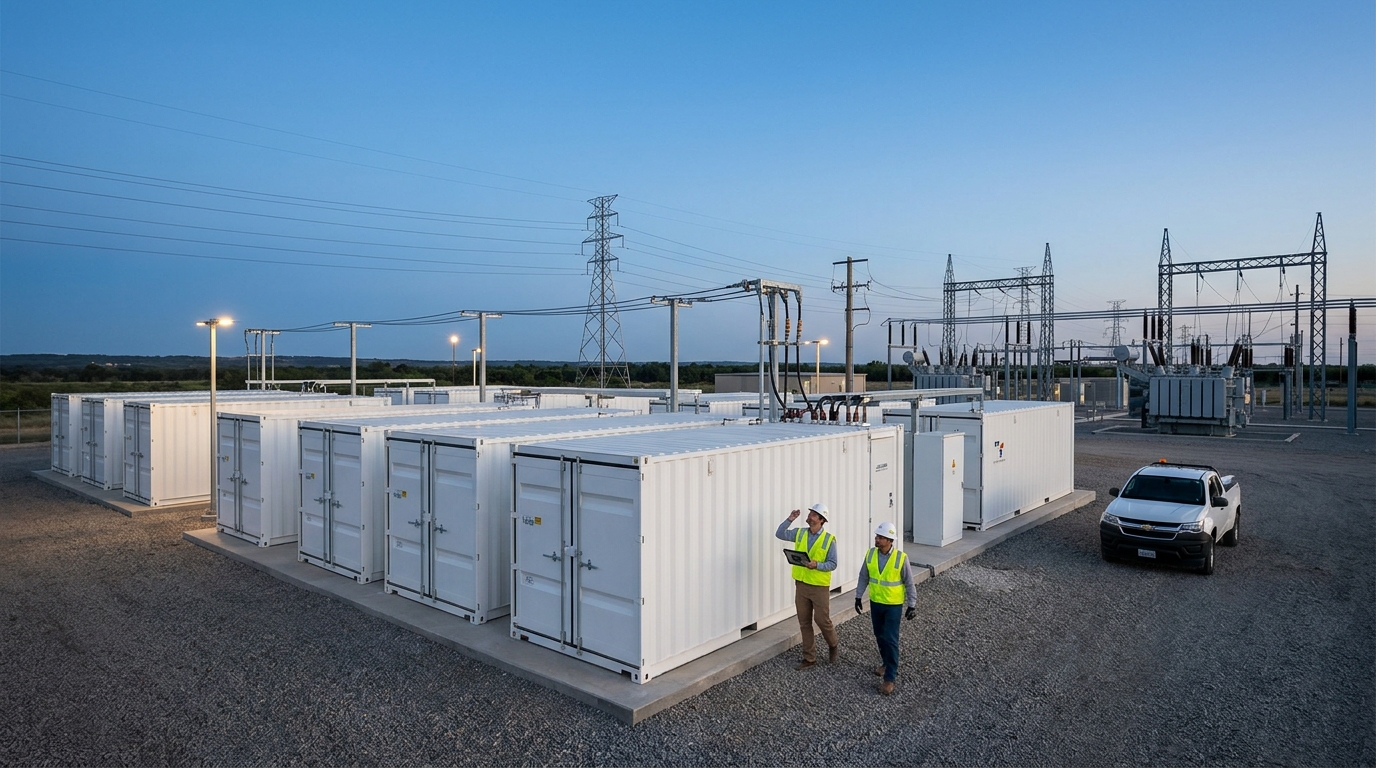
First Solar is a utility-scale company. It manufactures thin-film PV modules — cadmium telluride technology, not crystalline silicon — and sells those modules to large power producers building grid-scale solar farms. The company is almost entirely B2B, almost entirely utility-scale, and almost entirely dependent on project-driven demand cycles. It reported Q1 2026 net revenues of $1.04 billion, a 24% year-over-year increase, with net income per diluted share of $3.22 — up 65% year-over-year. Adjusted EBITDA came in at $520 million. Q1 production reached 4.3 gigawatts of modules at approximately 96% utilization across U.S. facilities.
The balance sheet is clean. First Solar ended Q1 with $2.4 billion in cash and a net cash position of $2 billion. The contracted sales backlog stood at 47.9 gigawatts as of March 31, 2026 — providing multi-year revenue visibility that most manufacturing businesses would envy. Full-year 2026 EPS consensus sits around $17.61 on roughly $5.1 billion in revenue. At $233, the stock trades at approximately 13x to 14x forward earnings. For a company with 24% revenue growth and a 47.9 GW backlog, that multiple is unusually compressed.
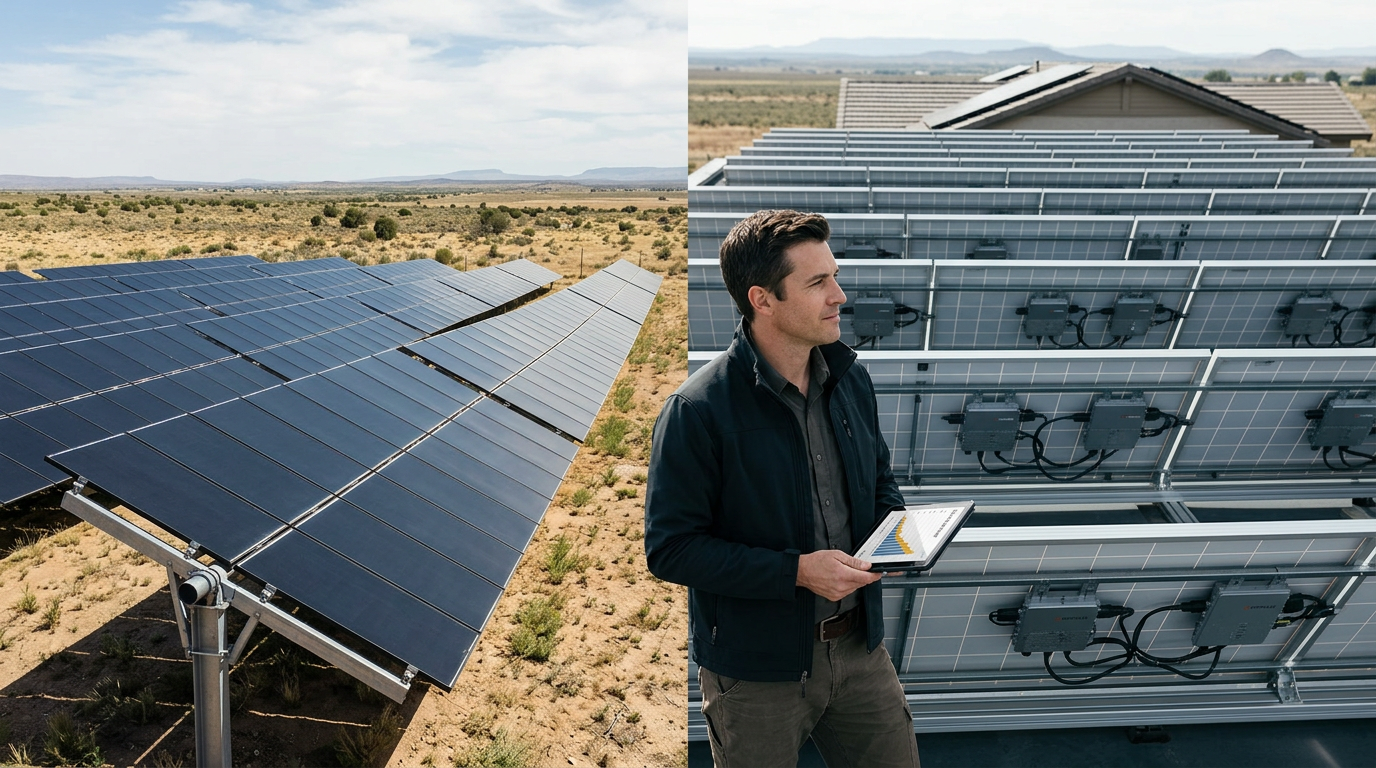
Enphase is a residential and commercial company. It sells microinverters — semiconductor-based devices that convert solar energy at the individual module level — and increasingly integrated battery storage systems. The business model is more like a technology company than a manufacturer. In Q4 2025, Enphase shipped approximately 1.55 million microinverter units and 150.1 megawatt-hours of IQ Batteries. It launched its IQ9 microinverter in the United States in January 2026 and continues expanding its third-generation IQ Battery 5P globally across 13 countries. Enphase’s ROE of 41.33% is dramatically higher than First Solar’s 17.32%, reflecting the difference between a semiconductor-driven margin structure and a manufacturing-scale one.
Why Enphase Is Winning This Year
The short answer: Enphase sells into residential demand, which is recovering. First Solar sells into utility-scale demand, which is lumpy and subject to project timing.
Year-to-date, ENPH is up roughly 55% while FSLR is down approximately 16% — a 70-plus percentage point gap that is almost entirely explained by which end-market bounced first. Residential solar in the U.S. has benefited from sustained homeowner interest in energy independence, IRA incentives for residential installations, and battery storage demand that is growing faster than panels alone. Enphase’s battery storage segment gives it a second revenue stream that microinverter competitors don’t have at scale.
There’s also a product cycle advantage. The IQ9 launch in January gave Enphase a new selling point heading into the spring installation season — the busiest time of year for residential solar. That timing helped. First Solar’s Q2 report (estimated for July 30) will face year-over-year comparisons that are difficult because Q2 2025 was a strong period for the utility-scale project cycle. The consensus EPS estimate for Q2 2026 is approximately $2.85, down roughly 10% from the prior-year quarter.
The Valuation Disconnect
Here’s the part that makes First Solar interesting despite the underperformance. At roughly 13x to 14x forward earnings, FSLR trades at a meaningful discount to its industry peers. The solar sector average forward P/E sits around 22x. First Solar’s PEG ratio is approximately 0.51 versus the industry average of 0.97. A PEG below 1 on a company growing earnings 24% year-over-year with a $2 billion net cash position and 47.9 GW of backlog is a valuation that demands explanation.
The explanation isn’t complicated. The market is discounting First Solar on tariff uncertainty — specifically the complex interplay between Section 232 aluminum tariffs, Southeast Asian manufacturing capacity, and the ongoing review of trade policy affecting solar module imports. First Solar’s CEO discussed exactly this dynamic on the Q1 earnings call, noting that decisions about Southeast Asian capacity depend on how 232 tariff outcomes resolve. That policy overhang is real. It’s also a knowable risk with a timeline, unlike the open-ended uncertainty that plagued the stock during the worst of the tariff panic earlier this year.
Deutsche Bank’s upgrade to $272 with a Buy rating is explicitly bet-taking that the tariff overhang resolves in a way that doesn’t damage First Solar’s competitive position. Given that FSLR is the only U.S.-headquartered company among the world’s largest solar manufacturers, with a sixth U.S. facility expected online in the second half of 2026, the domestic manufacturing story is a structural differentiator that tariffs arguably reinforce rather than undermine.
Comparative Framework
Forward P/S: FSLR at approximately 3.56x versus ENPH at approximately 5.03x. Gross margins: First Solar at roughly 38% to 42% versus Enphase at approximately 44% in recent quarters — Enphase wins on gross margin, First Solar wins on operating margin (29.2% versus 6.5%). Backlog visibility: First Solar has 47.9 GW under contract; Enphase’s visibility is shorter-cycle and project-by-project for commercial, recurring demand for residential. Free cash flow: First Solar generated approximately $1.67 billion in free cash flow over the trailing twelve months. Enphase’s is positive but smaller given its capital structure and growth investments.
The ROE comparison — 41.33% Enphase versus 17.32% First Solar — reflects business model differences more than competitive quality. Enphase’s semiconductor model generates higher returns on capital by design. That’s not a knock on First Solar; it’s a feature of the utility-scale manufacturing model where volume and backlog matter more than return on equity.
Three Scenarios
Bull Case for First Solar: Tariff policy clarifies favorably for domestic manufacturers before Q2 report on July 30. Deutsche Bank’s $272 target is validated as other analysts follow the upgrade. Q2 EPS meets or beats the compressed $2.85 estimate. Utility-scale demand re-accelerates in H2 2026 as power grid projects finalized after tariff uncertainty move forward. Stock recovers toward 52-week high near $320.
Base Case: First Solar meets Q2 guidance, tariff situation remains ambiguous through Q3, stock consolidates between $230 and $260. Enphase continues its momentum trade through summer as residential demand stays solid, but begins to face tougher comparisons in Q3 as the IQ9 launch anniversary approaches. Both stocks drift sideways with sector sentiment.
Bear Case for First Solar: Tariff resolution goes unfavorably, forcing Southeast Asian capacity decisions that pressure margins. Q2 EPS misses the already-reduced $2.85 estimate. Utility-scale project delays push revenue recognition into 2027. Stock tests the $195 to $200 support level near recent 52-week lows.
Active Trader Strategy Framework
The more interesting trade right now is First Solar, not Enphase — and that’s a contrarian call worth defending. Enphase is up 55% this year and trading at 5x forward sales. The momentum is real, the business is executing, and the product cycle is helping. But momentum at that magnitude with a July 30 Q2 report approaching creates a risk that’s hard to manage. A clean Q2 from Enphase keeps it running. A miss on guidance — even a small one — hits a stock that’s been re-rated on optimism.
First Solar just got a major Deutsche Bank upgrade at a moment when the stock is 27% off its highs and trading at a 40% discount to industry peers on forward earnings. The backlog of 47.9 GW doesn’t disappear based on a quarter of tariff noise. The $2 billion net cash position gives the company the ability to wait out policy uncertainty without balance sheet stress. The July 30 earnings date is the catalyst window.
Enphase is a momentum trade. First Solar is a value reversion trade with a specific catalyst. Both can work. They just work for different investors with different time horizons — and that distinction is the entire point of watching them together.
For informational and educational purposes only. Not investment advice. Trading involves risk, including loss of principal.