
Hey there, bargain hunter.
There is a stock up 86% year-to-date that almost nobody is calling a bubble. That is unusual. Usually by the time something doubles, half the internet is screaming sell. With Vertiv (VRT), the crowd is mostly quiet — and the quiet might be justified.
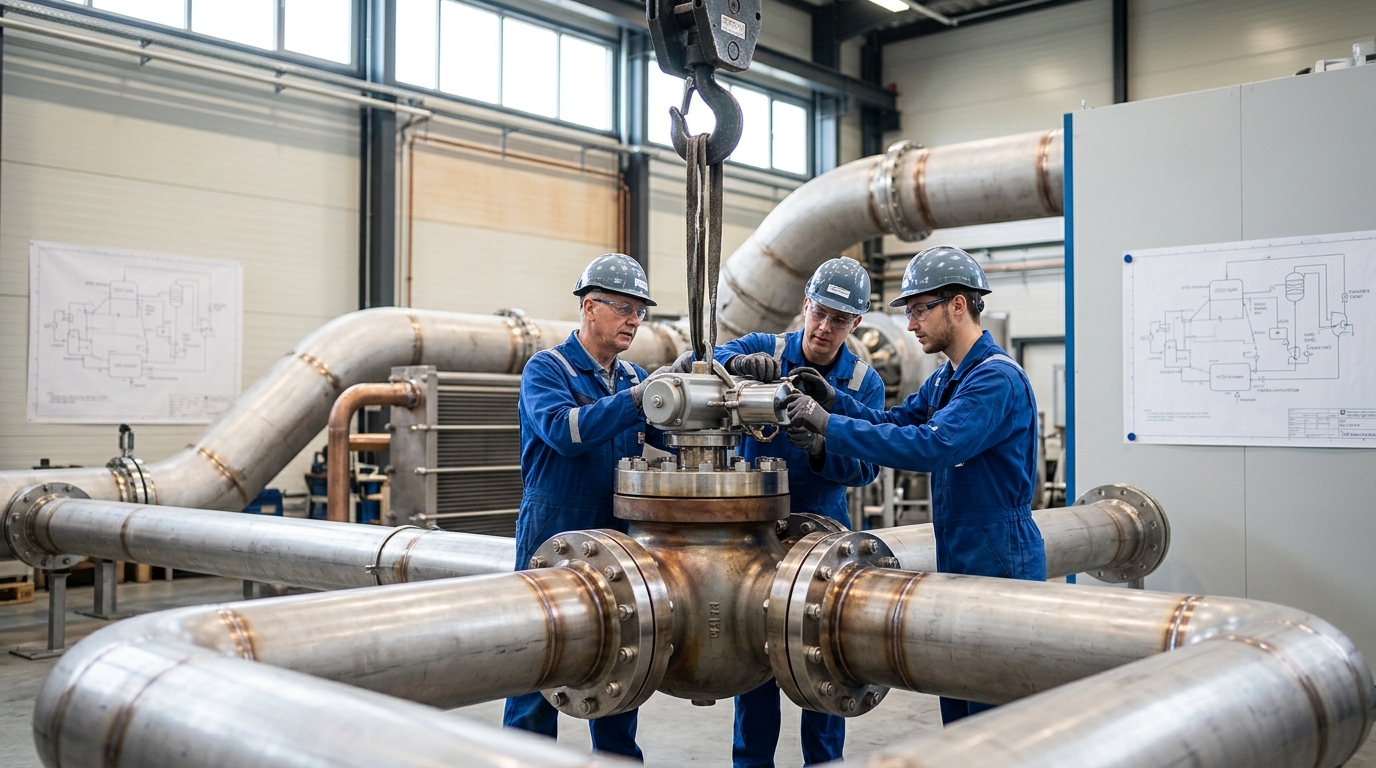
Here’s the thing. Vertiv is not a chip company. It is not software. It sits between the utility grid and the server racks — the power, cooling, and critical infrastructure that has to exist before a single GPU can do anything useful. Every AI data center that goes up needs Vertiv’s products first. That is a different kind of moat than most investors think about.
What Happened
Q1 2026 results landed on April 22. Revenue hit $2.65 billion, up 30% year-over-year, driven by 23% organic growth and a 44% organic expansion in the Americas. Adjusted EPS came in at $1.17. Adjusted operating margins expanded to 20.8%, up 430 basis points from Q1 2025.
The stock has gone from around $160 at the start of the year to roughly $324 as of July 10, 2026. The 52-week range is about $110 to about $380.
Management responded to the quarter by reaffirming full-year 2026 adjusted EPS guidance of $6.30–$6.40 and raising the full-year revenue (net sales) outlook to $13.25 billion–$13.75 billion. Vertiv has also disclosed an order backlog of about $15.0 billion as of December 31, 2025.
What the Business Actually Does
Vertiv designs and sells uninterruptible power supplies, switchgear, busways, chillers, computer-room air handlers, and liquid cooling distribution units. Roughly 75% of revenue comes from data center customers. This is not cyclical hardware in the traditional sense. When a hyperscaler commits to a build, Vertiv’s products are ordered before the construction crew shows up.
Liquid cooling is the specific growth driver worth watching. Traditional air cooling systems are proving insufficient for modern AI clusters running dense GPU configurations. The global data center liquid cooling market is projected to grow from approximately $5.7 billion in 2026 to $29.2 billion by 2033, according to Persistence Market Research. Vertiv has been deliberately positioning itself at this transition point, most recently acquiring Strategic Thermal Labs in April 2026 to strengthen cold-plate engineering and high-density thermal validation capabilities.
On top of that, Vertiv opened a new manufacturing facility in Johor, Malaysia on July 1, 2026, expanding its footprint to support demand across Asia as data center buildouts accelerate in that region.
One more thing worth noting: Vertiv itself has been highlighting industry momentum toward 800 VDC architecture for AI data centers, including references to recent announcements from NVIDIA supported by Vertiv and others. Specific recent comments attributed to a named Barclays analyst could not be verified.
The Valuation Argument
This is where it gets complicated.
At roughly $324 per share, Vertiv trades at roughly 77x trailing earnings based on widely reported trailing P/E calculations in early July. The 5-year beta is commonly reported around ~2.0, meaning this stock moves fast in both directions. A 50% drawdown is not a theoretical risk — it happened in 2023 and again briefly in 2024.
The bull case for the multiple rests on three numbers: 30% revenue growth, 64% adjusted operating profit growth, and a backlog that keeps replenishing. Analysts projecting Q2 EPS of $1.43 are pricing in a 50.5% year-over-year surge from the year-ago quarter. The company has beaten bottom-line estimates in each of the last four quarters.
26 analysts cover VRT. The consensus is Strong Buy. The average 12-month price target sits around $377.
The Risk Nobody Talks About Enough
Hyperscalers are the customers. If Amazon, Microsoft, Google, or Meta slow their AI capex commitments — even briefly — VRT shares will feel it faster than almost any other infrastructure name. The beta cuts both ways.
There is also bearish options flow worth monitoring. Recent sessions have seen elevated put activity in VRT. That is not necessarily alarming at this price level and this volume, but it is a signal to watch.
What to Watch on July 29
- Q2 adjusted EPS vs. consensus of $1.43
- Order backlog update
- Full-year guidance revision — up, maintained, or trimmed?
- Any commentary on liquid cooling mix as a percentage of revenue
- Americas organic growth rate vs. Q1’s 44%
The Q2 report is the first real test of whether the stock’s 86% run reflects fundamentals or momentum. Both can be true simultaneously — until they are not.
Worth a look before July 29.