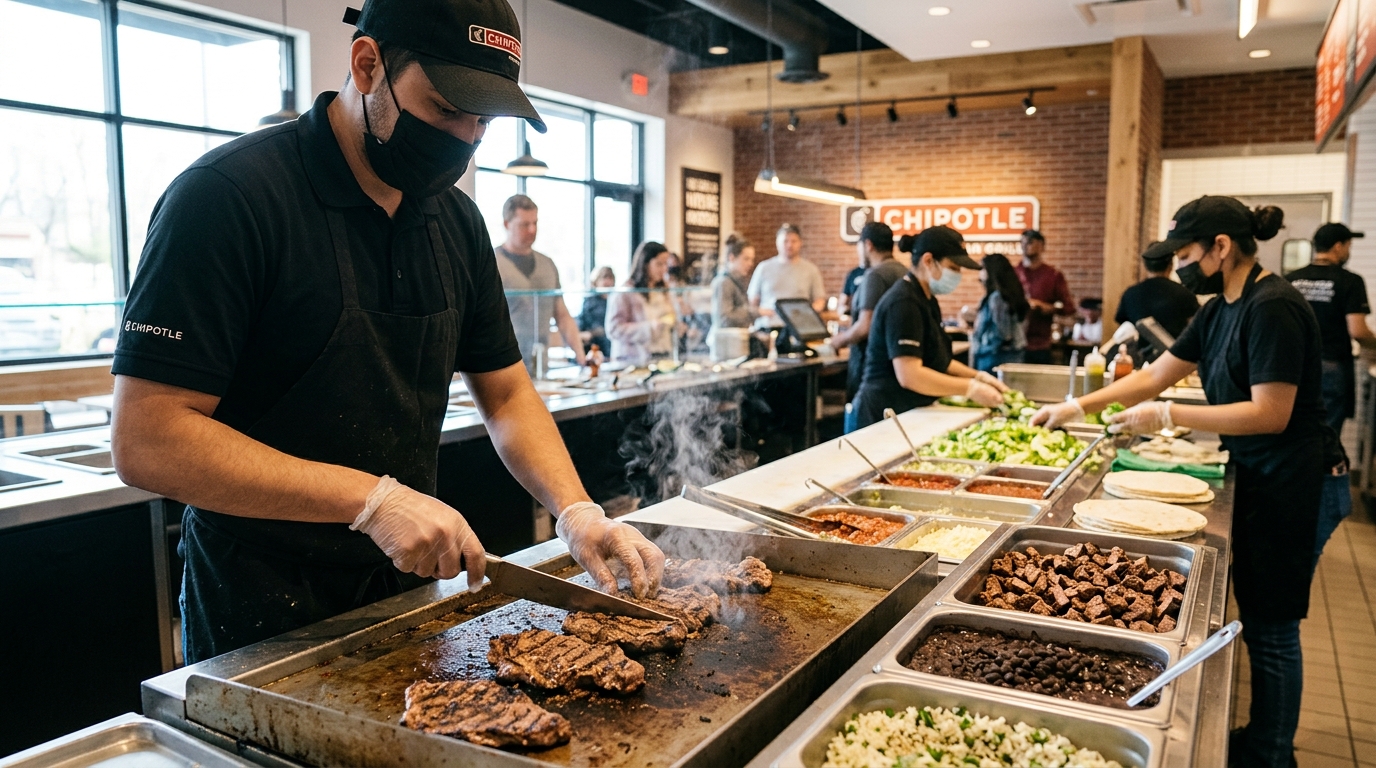
Restaurant stocks caught a bid Friday morning and held it into the weekend. On September 11, the CDC announced that the outbreak linked to processed iceberg lettuce from Taylor Farms de Mexico had ended. The outbreak had been particularly damaging at Taco Bell locations, but news that it was over lifted stocks of restaurants that weren’t directly involved, including Chipotle Mexican Grill and McDonald’s. For CMG specifically, the relief trade makes intuitive sense. Chipotle’s stock had dipped nearly 5% on July 15 following news of the widespread outbreak, despite the company stating its ingredients were not linked to the illness. Now that overhang is gone. The question is what’s left beneath it.
What’s left is a cost problem. Cost of sales rose to 29.7% of revenue in Q2, roughly 80 basis points higher year over year. Chipotle attributed the increase largely to inflation across several input categories, plus mix from heavier usage of higher-cost ingredients like chicken, steak and produce. That’s not a one-quarter aberration. The company expects cost of sales to come in just under 30% in Q3, with low-single-digit inflation, indicating continued but manageable pressure on gross profitability. Meanwhile, management has also pointed investors to a narrowing gap between pricing and inflation in the back half of 2026, which could keep pressure on margins if volumes don’t do more of the work.
Restaurant-level operating margin contracted to 25.2% from 27.4% a year ago, even as revenue climbed 9.3% year over year to about $3.3 billion, fueled by 100 new restaurant openings and a 2.2% comparable sales gain. The top-line momentum is real. The margin compression is also real. Management’s answer is selective price increases: CFO Adam Rymer told investors the chain expects to raise prices about 1% to 2% as margins remain under pressure. That pace is slower than inflation, which means Chipotle is deliberately choosing not to fully protect margins near term. The bet is that volume holds, or improves, as the food-safety noise fades.
There’s something to that bet. On the Q2 call, CEO Scott Boatwright stressed that Chipotle was not involved in the cyclospora outbreak and said the recalled product does not appear on its menu. Still, the chain experienced a softening in sales trends in the second half of July, which management attributed in part to heightened consumer caution and broader cyclospora concerns. With that drag now removed, full-year comparable sales guidance calls for growth in the low single-digit range. The loyalty program has traction too: Chipotle Rewards has 23 million active members, with daily enrollments up nearly 20% since the April relaunch.
Why 33 Times Earnings Is Still a Bet, Not a Bargain
Here is the honest tension in the CMG trade today. The trailing price-to-earnings ratio sits in the low-30s, well below widely cited long-run medians for the stock. On one level, CMG looks historically cheaper for what it is. On another level, low-30s times earnings on a business guiding to low-single-digit comparable sales growth, with costs running near 30% of revenue and margins down 220 basis points year over year, is not an obvious value. The average 12-month analyst price target is $43.77, with 24 analysts recommending a buy and none suggesting a sell. That consensus reflects confidence in the brand’s durability, not in near-term earnings acceleration.
The cyclospora cloud lifting is genuinely good news for CMG. It removes a sentiment drag that had nothing to do with the company’s actual supply chain. But sentiment was never the primary obstacle. Beef is. Management has repeatedly flagged beef as a key driver of inflation, and it has also been clear that the company does not intend to fully offset that inflation through pricing. Until beef moderates or volume growth is strong enough to absorb the difference, margin recovery remains a 2027 story at best. Friday’s bounce is justified. A full re-rating from here requires more than a clean bill of health from the CDC.