
Vital Farms has had a brutal year. Now it may be shopping itself to end it.
An Axios Pro report emerged Wednesday citing a targeted valuation of $15 to $25 per share for the Austin-based pasture-raised egg producer, after shares rose on reports the company is exploring strategic options including a possible sale or take-private transaction. With a market cap of roughly $502 million, VITL trades at $11.70, meaning the floor of that reported range represents about a 28% premium and the ceiling is a little more than double today’s price. That spread sounds compelling. The question is what it actually takes to get there.
The Business
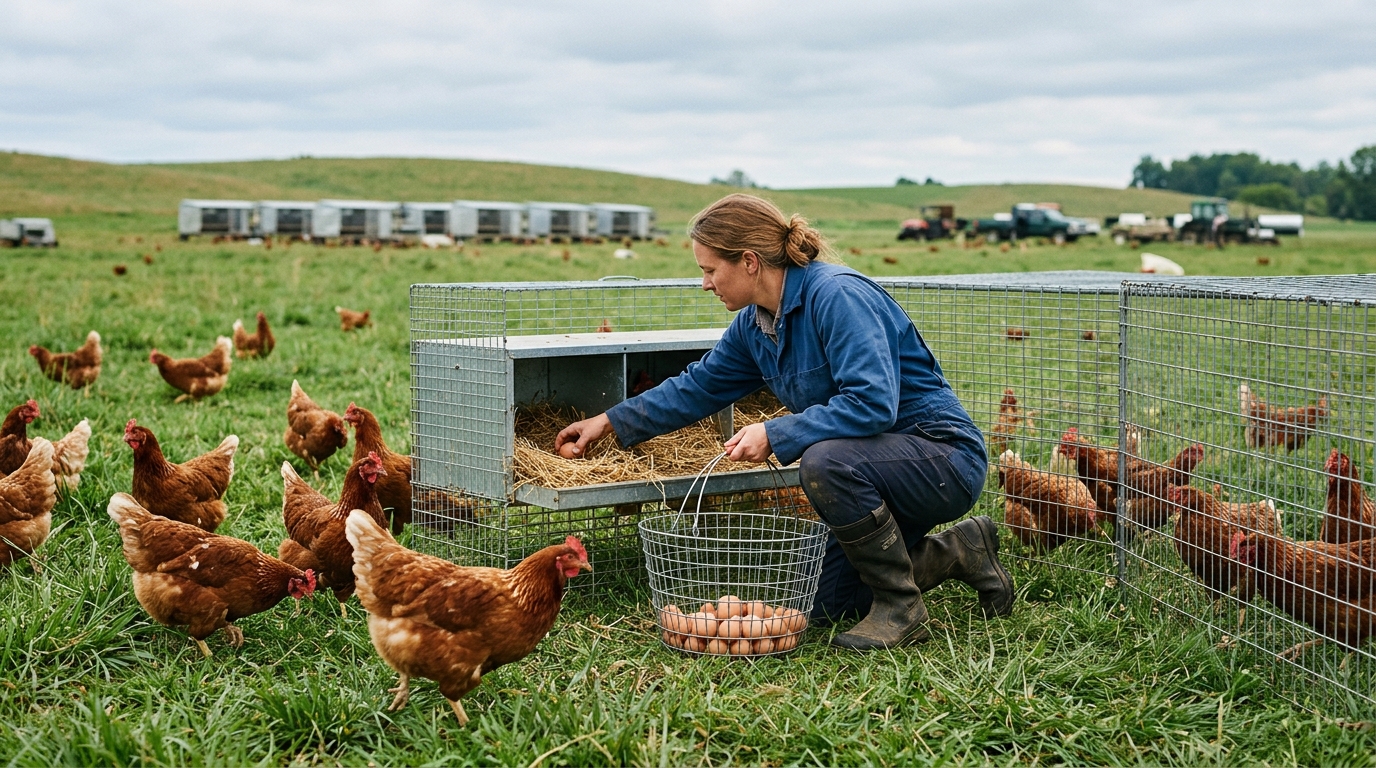
Vital Farms is a Certified B Corporation that offers a range of ethically produced foods nationwide, working with over 600 family farms and describing itself as the leading U.S. brand of pasture-raised eggs by retail dollar sales. The company ended fiscal 2025 at $759.4 million in net revenue, not nearly $1 billion. That brand franchise is real. The problem is what happened to it in 2026.
Why Wall Street Is Paying Attention
Net revenue fell 10.1% year over year to $166.0 million in Q2 2026, while gross margin compressed to 6.6% from 38.9% in Q2 2025. Read that again: gross margin collapsed by 32 percentage points in a single year. The main driver was oversupply in the shell egg market. Management said the company absorbed $19.5 million of losses from excess breaker sales, alongside other supply-management and discrete expenses that totaled $28.1 million in the quarter.
According to reporting that followed the Axios item, the pasture-raised egg producer’s market capitalization has fallen more than 80% from a roughly $2.3 billion peak. The 52-week high stands around $52, more than 340% above the current share price. That collapse is what makes the M&A angle interesting. A buyer could acquire an established premium brand at a fraction of its recent peak.
StoneX analyst Ben Klieve reiterated a Buy rating and an $18 price target, noting that the strategic options under discussion include a potential acquisition with a targeted valuation range of $15 to $25 per share. StoneX said it cannot confirm the report, but the firm noted that exploring a strategic process makes sense for the company.
What’s Driving the Opportunity
The bull case rests on two legs: the brand itself and the reported process. There are still signs that the core franchise has not broken. Vital Farms said retail dollar share in shell eggs improved by more than 200 basis points year over year, and management pointed to narrowing price gaps versus branded competitors as evidence that distribution and household acquisition trends are still moving in the right direction.
By lowering fixed overhead and right-sizing supply, management believes it is well positioned for a margin recovery in the second half of the year. The company also said it now has $185 million of credit capacity following new financing arrangements, which it believes creates the necessary flexibility to execute future pricing and growth plans. That liquidity move matters: it reduces the most acute distress risk and makes an orderly process more credible.
What Could Go Wrong
Plenty. VITL’s premium pricing power eroded, forcing promotional activity and a sharp cut to 2026 guidance: net revenue is now guided to $775 million to $800 million, and adjusted EBITDA is guided to $0 to $10 million. A buyer at $15 to $25 per share would be paying a meaningful premium for a company currently generating essentially no earnings. That requires confidence the oversupply cycle ends, margins recover, and the brand premium holds.
There is also no confirmed process. Takeover speculation often lifts shares when a named outlet floats a premium to the public market price, especially after a steep drawdown. That lift can evaporate just as quickly if a deal fails to materialize. During Q2 earnings, Vital Farms reported a GAAP net loss per diluted share of $0.72. Operational risk has not disappeared.
The Bottom Line
VITL at $11.70 is priced for continued pain, not for recovery. The Axios report introduces a scenario where a strategic buyer steps in before that recovery plays out in public markets, capturing the brand at distressed prices. The reported $15 floor is about 28% above today. The $25 ceiling is a little more than double.
The risk is that no deal arrives, the oversupply drags longer than management’s second-half recovery suggests, and the stock revisits its 52-week low of $7.95. Jefferies said the second quarter likely marked trough earnings, as oversupply and price-gap investments pressured sales and mix drove an EBITDA miss. If that call proves correct, VITL has fundamental upside regardless of any transaction. If it proves wrong, the M&A speculation fades and the stock does too. Position size accordingly.