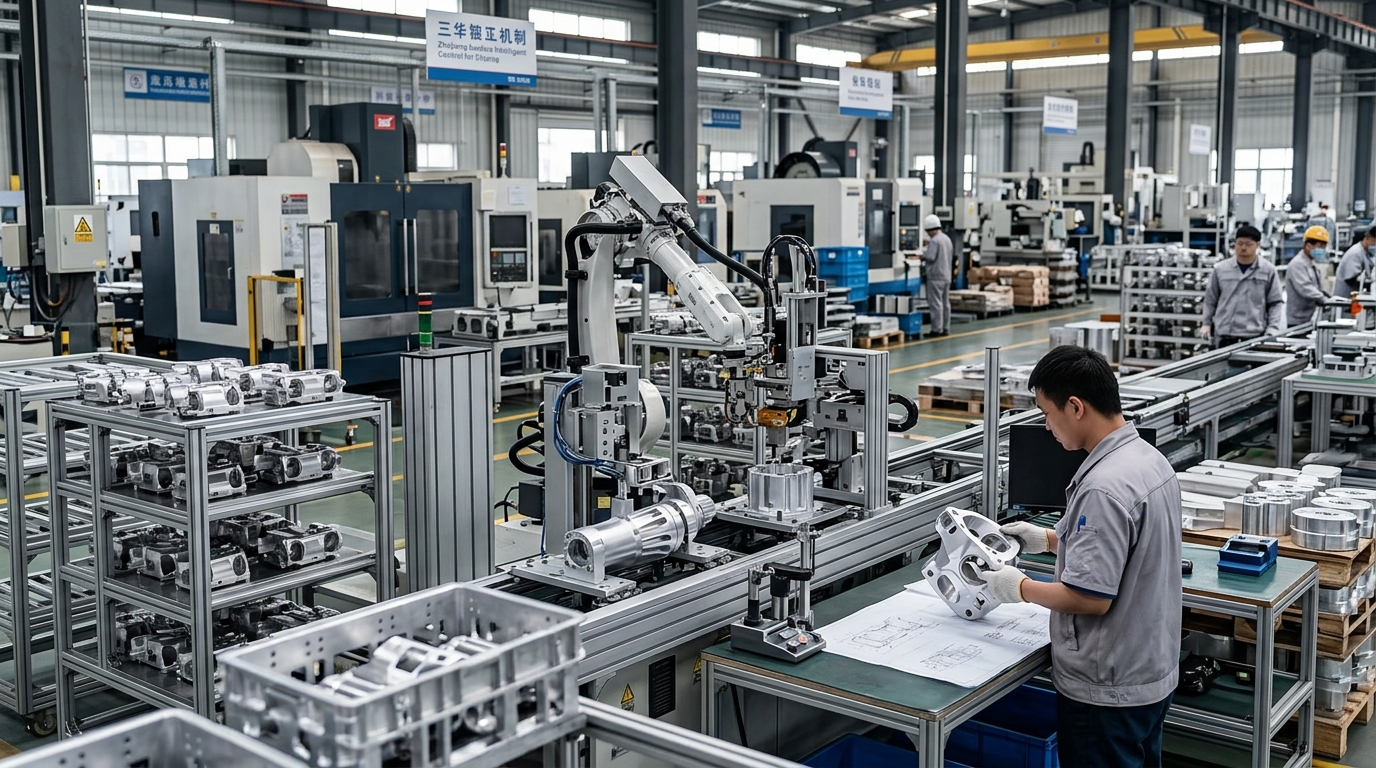
For two years, Optimus has lived in Tesla’s stock price as a promise. No costed bill of materials, no named supply chain, no verified unit count. That changed on September 16, when Tesla teams arrived in Ningbo, Zhejiang province, and began field audits on September 17. Chinese companies set to undergo supplier audits included heat-control component manufacturer Zhejiang Sanhua Intelligent Controls, auto parts supplier Ningbo Joyson Electronic, and chassis producer Tuopu Group, according to two corporate executives with business ties to the manufacturers. The market noticed, but the index move is harder to verify cleanly in public data, so treat the 1.4% jump as directional rather than definitive.
This is not another demo. Reports described Tesla’s robotics team as focused on verifying exclusivity and consistency for mass production, assisting supply chain partners with equipment debugging, and migrating manufacturing capabilities from U.S. factories to Chinese suppliers. That last phrase deserves attention. Moving production capability to Zhejiang means Tesla is not treating these firms as backup vendors. It is treating them as the primary line.
The Business Case
Most of the firms being examined by Tesla as potential Optimus suppliers already provide automotive components used in the company’s electric cars, and they are all based in eastern China’s Zhejiang province. That existing relationship matters. These are not untested partners being onboarded under pressure. They already know Tesla’s quality standards, tolerance requirements, and logistics cadence.
According to supply chain research circulated by multiple China-based brokerages, Tesla has completed factory audits for its third-generation Optimus robot, with Chinese suppliers securing roughly 70% of the component share. Separate reporting says Tesla has already placed orders with supply chain companies, with a reported plan to produce about 50,000 Optimus units in 2026 for deployment across its global gigafactories, though Tesla has not publicly confirmed that figure. Musk’s own range has been wider in public comments: on the high end, he has floated ambitions that imply very large production by 2030, but investors should distinguish long-range vision from a verified 2026 unit plan.
Why Wall Street Is Paying Attention
The supplier audit is the first time Optimus moves from roadshow slide to purchase order. That distinction is what lifted Tuopu, Sanhua, and Joyson this week. Reports out of China said Joyson Electronics hit the daily limit up in China’s A-share market, while Tuopu Group rose 4.36% and Sanhua Intelligent Controls gained 2.70%.
Meanwhile, Tesla’s core car business is showing cracks. Goldman Sachs analyst Mark Delaney cut his Tesla Q3 2026 delivery forecast to 435,000 vehicles from 490,000. He said sales in China, the U.S., and Europe are running below his earlier expectations. Goldman kept a Neutral rating and $360 price target on TSLA. With the stock at roughly $364 (it closed at $364.27 on September 18), Goldman sees almost no upside from the auto business alone. Optimus is not just a new product line, it is the entire thesis for owning the stock above that level.
What Could Go Wrong
The risks here are layered. First, the unit count. A 50,000-unit 2026 production target has emerged from China-based reporting and research notes, while Tesla publicly frames Optimus as progressing toward volume production without consistently anchoring investors to a specific 2026 number. Musk himself warned on the Q1 2026 earnings call that early output would be “quite slow,” calling it “literally impossible to predict” the production rate this year, and pointing to “10,000-plus” unique items across a new production line.
Second, concentration risk. Uncertainties in Tesla’s production ramp-up, customer concentration risks, and pressure from North American production localization remain potential challenges. Building most of your robot in one Chinese province creates exposure to supply disruption, tariff risk, and geopolitical friction. The Zhejiang audits also landed just ahead of Xi Jinping’s U.S. state visit on September 24, 2026, which adds political texture to an already complicated sourcing picture.
Third, the EV business cannot carry the stock alone. Tesla shares are down about 20% year to date as of September 18, 2026, and over the past 52 weeks, shares hit a high of $498.83 and a low of $297.38. The auto unit is softening and the CFO sold shares in early September, though the disclosed transaction was tied to automatic tax withholding on vested restricted stock units rather than a discretionary sale. That backdrop makes the Optimus thesis load-bearing, not supplementary.
The Bottom Line
The Zhejiang audit is meaningful precisely because it is operational rather than promotional. Real engineers, real factories, real component orders. That is new information, and it narrows the gap between Optimus as concept and Optimus as product. Optimus production progress is increasingly central to TSLA’s valuation.
But the supply chain audit is not the same as shipped units, and shipped units are not the same as profitable revenue. TSLA at $364 already prices in a successful ramp. Investors buying here are not buying the audit news; they are betting that a large 2026 robot ramp materializes, that Chinese suppliers execute without disruption, and that the EV business stops bleeding market share. That is a lot of conditions to clear simultaneously. The Zhejiang audit makes the Optimus story more credible. It does not yet make it bankable.