Hey there, bargain hunter. Markets are closed today for Juneteenth. Tuesday is when things get loud again, and one of the first things on the calendar is FedEx dropping its Q4 fiscal 2026 results after the bell on June 23.
Most investors skip FedEx earnings. That’s a mistake, and not just because FDX is up nearly 80% over the past 52 weeks while most people weren’t paying attention.
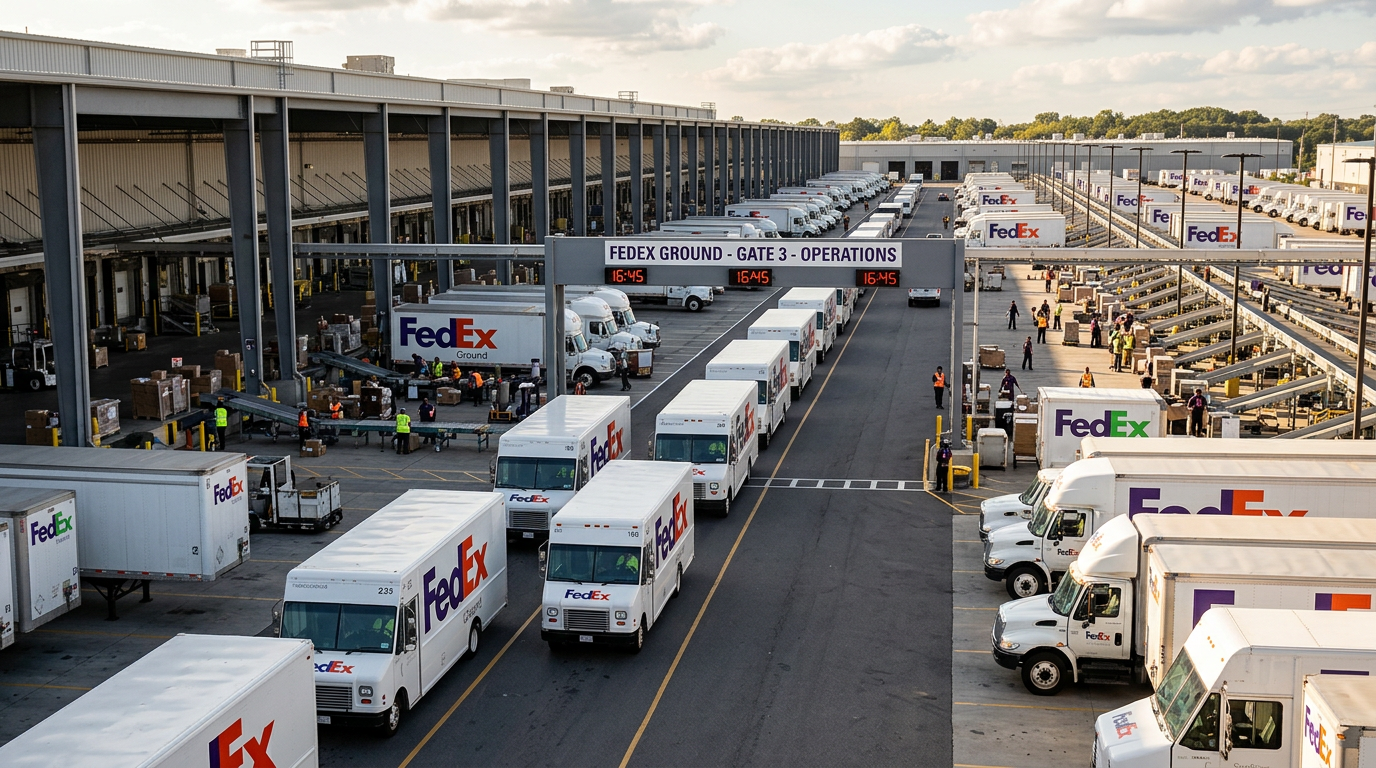
FedEx is a real-time readthrough on the global economy. Seventeen million packages per day moving through one network. That’s not just a delivery company. It’s an economic sensor. What management says Tuesday about trade volumes, pricing trends, and global demand will set the tone for a lot of industrial and logistics names heading into the second half of 2026.
What the Street Is Expecting
The Zacks consensus heading into Tuesday is $5.91 EPS on $24.18 billion in revenue for Q4 fiscal 2026. Revenue is expected to rise roughly 8.8% from the year-ago quarter. EPS is projected to fall about 2.6% year-over-year, not because the business is deteriorating, but because the prior year’s comparison included one-time tailwinds.
The company has beaten Wall Street’s EPS estimates in each of its last four quarters. The last quarter produced a 26.81% earnings surprise, $5.25 actual versus $4.14 expected. When a company has that kind of surprise history, the whisper number is usually sitting above the published consensus.
The Freight Spin-Off Is the Bigger Story
Here’s what most people skipped: FedEx completed the spin-off of FedEx Freight on June 1, 2026. The LTL trucking division is now its own publicly traded company, listed on the NYSE under the ticker FDXF.
This matters for two reasons. First, FedEx Freight had been the weakest link in consolidated results. LTL industry demand has been soft, and the unit was dragging on margins. Removing it isolates FedEx’s core express and parcel business, which has been growing revenue at 8% to 10% annually and just posted its sixth straight quarter of margin expansion. Second, Tuesday’s earnings call will give investors their first real read on the post-spin FedEx. How management frames the standalone business, what the new capital allocation picture looks like, and whether the leaner FedEx justifies the premium the stock now carries.
Management also finalized a multi-year agreement with Amazon to handle deliveries of oversized packages, a deal reached shortly after UPS stepped back from Amazon volume. That’s a meaningful new revenue line worth watching in Tuesday’s commentary.
The Trade Headwind Is Real but Likely Priced In
Q1 of fiscal 2026 included a $150 million headwind from the China-to-U.S. shipping lane compression, a direct result of tariff and de minimis policy changes. Management has been guiding investors around this all year. The question for Tuesday is whether those headwinds have stabilized or whether there’s incremental pressure in Q4 from continued de minimis changes and global trade volatility.
U.S. domestic package revenue grew 10% in Q3, the highest quarterly result since fiscal 2022. International export volumes turned positive, up 2% year-over-year. That momentum is the bull case for Tuesday’s number.
The Valuation Picture
- FDX 52-week return: approximately 79.9% vs. S&P 500’s 30.6%
- Full-year fiscal 2026 EPS guidance range (raised): $19.30 to $20.10
- Analyst consensus for full-year EPS: approximately $19.78, up 8.7% from fiscal 2025
- Fiscal 2027 consensus EPS estimate: approximately $22.04, implying roughly 11.8% year-over-year growth
- Average analyst price target: $404.62, a modest 4.3% above current levels
- Analyst rating: 16 of 27 covering analysts rate it Strong Buy
Honestly, 4.3% upside to the consensus target with the stock already up 80% in a year is not a screaming value opportunity. The business is genuinely stronger. The Network 2.0 transformation targeting $1 billion in annual savings is real and progressing. But a lot of that is already in the price.
What Would Actually Move the Stock Tuesday
Beat on EPS and revenue: probably a 2% to 4% move higher. Nothing dramatic unless the magnitude is large.
Full-year fiscal 2027 guidance: that would matter more than the Q4 number itself. If management signals confidence in sustained 10%+ EPS growth heading into next year, expect a stronger reaction.
Trade commentary that’s worse than feared: that’s the real downside scenario. If management signals Q4 was softer than Q3 due to renewed trade headwinds, the stock gives back recent gains quickly and pulls industrial and logistics names down with it.
For growth investors, the FedEx story is increasingly a 2027 and 2028 thesis, not a 2026 catalyst. For income and value investors, the business quality is real, but the entry point has moved considerably.
What I’ll be watching Tuesday, more than the EPS number, is what management says about pricing power heading into peak shipping season and whether the Amazon partnership is generating the volumes the deal implied. Those two data points are worth more than the headline beat or miss. Markets reopen Monday. Tuesday after the bell, we get our first real look at what the global shipping economy looked like in May 2026. Worth a close read regardless of what you own.