Something happened two days ago that most investors are still processing wrong.
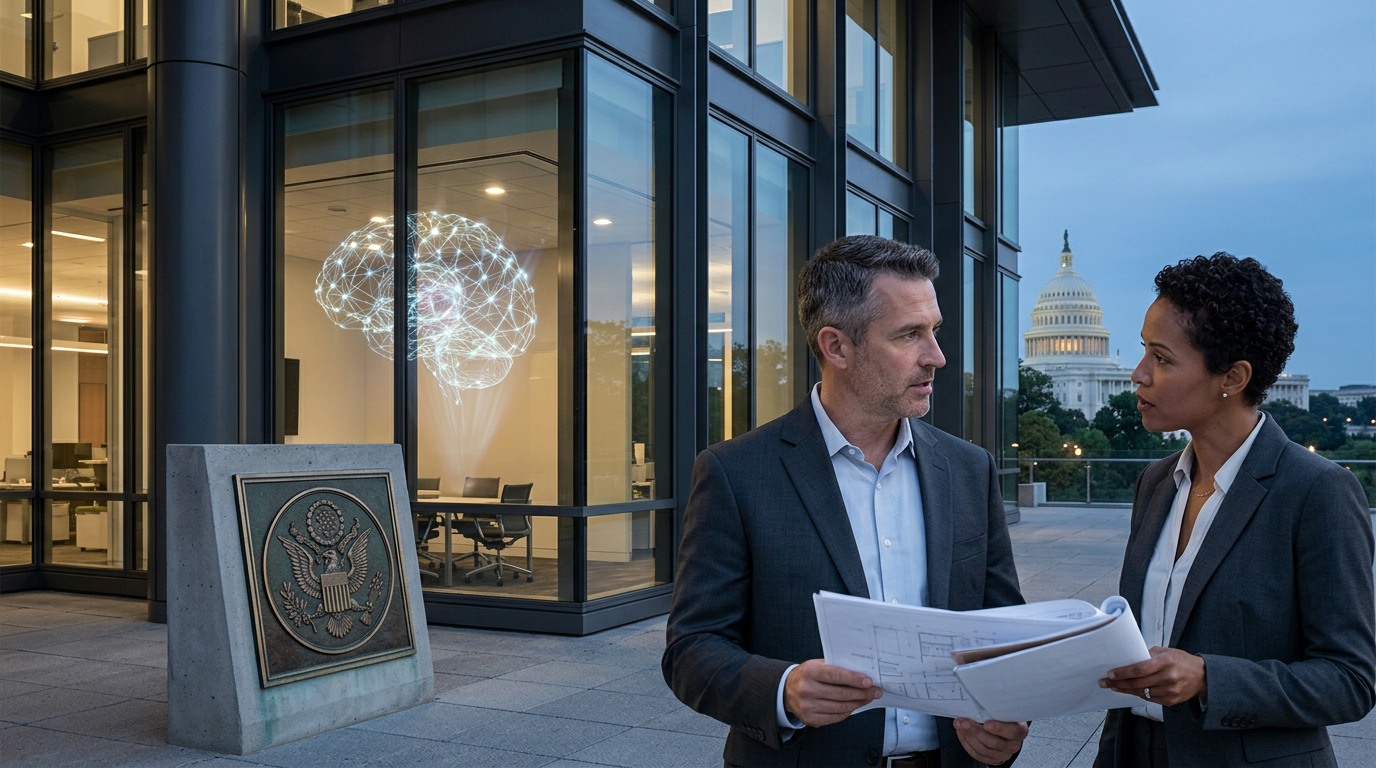
OpenAI has begun preliminary discussions about giving the U.S. government a 5% stake in the company, and the market’s reaction so far has been to treat it like a political story. It isn’t. It’s an investment story. A structural one.
At the $852 billion valuation OpenAI set in its March funding round, a 5% stake is worth roughly $42.6 billion. That number is almost a distraction. The real thing to focus on is what this signals about where the relationship between Washington and frontier AI is actually heading.
Here’s what matters. Government equity in frontier AI labs is a structurally different regulatory posture than subsidies or export controls, and it is arriving piecemeal rather than through a single deliberate policy. Intel first. Then Nvidia and AMD revenue-sharing arrangements on China chip sales. Now OpenAI. There is a pattern forming here, and it has direct implications for how the entire sector gets valued.
If Washington accepts the proposal, the transaction will move government relationships away from objective, arms-length oversight and straight into permanent financial entanglement. If federal agencies become major shareholders in the dominant AI developer, the government effectively sits on both sides of the negotiating table.
That cuts both ways. Critics are right to flag the conflict. But investors need to think about what a financially entangled government actually does to the regulatory environment for these companies. A government that owns equity in OpenAI is a government that has a reason to want OpenAI’s valuation to go up. That is a qualitatively different regulator than one that doesn’t.
Slight tangent, but it matters: news of these talks came just six days after OpenAI delayed the full public launch of GPT-5.6 at the government’s request, and Anthropic spent most of June with its Claude models disabled worldwide under the first U.S. export controls ever applied to an AI model rather than to hardware. The government isn’t just watching AI anymore. It is actively shaping product releases and timelines.
That is the context the market is underpricing.
CEO Sam Altman proposed that every leading U.S. AI developer contribute the same 5% share of equity to a vehicle modeled on the Alaska Permanent Fund, which pays annual dividends to state residents from Alaska’s oil wealth. Whether that specific framework survives doesn’t matter much. What matters is that the proposal signals a dramatic shift in the relationship between Silicon Valley’s most valuable AI startup and federal regulators.
The companies that benefit most from this shift may not be the ones getting the headlines. Pressure has been mounting on major U.S. AI firms as Washington grows increasingly wary of cybersecurity vulnerabilities and rising competition from Chinese open-source models that are proving to be almost as capable and significantly cheaper than some top American models. A government stake doesn’t eliminate that pressure. It redirects it. Suddenly Washington has a vested interest in making sure the American AI incumbents win.
Watch for the White House’s formal response. Watch whether Anthropic and Google get approached with similar terms. OpenAI’s expected IPO, reportedly targeting a $1 trillion valuation, is also a relevant marker since it would change what a 5% government stake is actually worth.
The AI regulation story just got a lot more complicated. And a lot more interesting for investors who are reading beyond the headline.
Disclaimer: This editorial is for informational purposes only and does not constitute investment advice or a recommendation to buy or sell any security. All data referenced is sourced from publicly available reports. Investing involves risk, including the possible loss of principal. Past performance is not indicative of future results.