
September 5, 2026
Constellation Energy’s fundamentals have never been stronger. Wall Street hasn’t caught up yet.
Investors have spent 2026 obsessing over which chipmaker wins the AI arms race. Meanwhile, the company that literally keeps those chips powered is trading near $285 a share, down roughly 20% year to date, at a price the business itself seems to disagree with. Management called the $5 billion buyback authorization “an intentional statement” that the stock represents a compelling use of cash at current prices. That is not a subtle signal.
Bigger than Nvidia? Louis Navellier thinks so.
In 2016, Louis Navellier recommended Nvidia at $2.51 – split-adjusted. It went up 44,000%. He also called Apple before a 36,000% rise and Microsoft before a 60,800% climb. Now he says a new AI device coming online in Tennessee is the setup for the biggest call of his career.
He’s agreed to reveal the stock at the center of it – down to the ticker – for free.
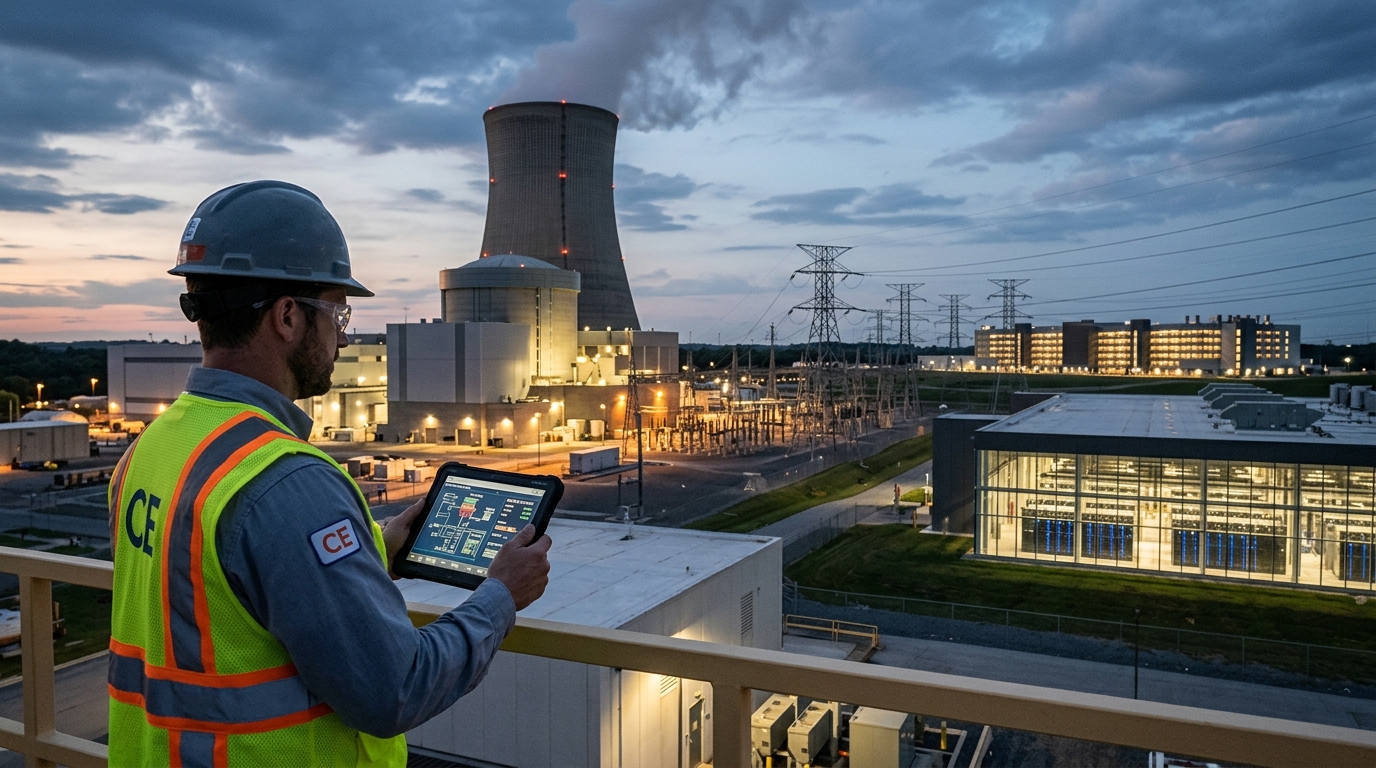
Constellation Energy operates the largest nuclear fleet in the United States, and that distinction has never been more commercially valuable. The company owns and operates 21 reactors, and says its fleet generates more than 10% of the nation’s emissions-free electricity. Nuclear runs continuously, emits no carbon, and cannot be replicated on any timeline that matters to a hyperscaler trying to power a data center by 2027. Constellation has secured long-term, carbon-free power agreements with both Microsoft and Meta, plus a deal with Walmart tied to output increases at its Illinois Dresden plant. These are 20-year commitments, not letters of intent.
The Fundamentals Keep Moving in One Direction
Adjusted operating EPS came in at $2.74 in the first quarter, up $0.60 from the same period in 2025. Revenue reached about $11.1 billion, well above consensus estimates. Management reaffirmed full-year EPS guidance of $11 to $12 and outlined free cash flow of $8.4 billion across 2026 and 2027, stepping up to between $11.5 billion and $13 billion in 2028 and 2029 as newer contracts begin contributing. Then came the Q2 report in August: revenue hit $7.5 billion, up about 23% year over year, with adjusted EPS of $2.55, up 33.5%. Full-year guidance was lifted to $11.50 to $12.50 per share.
5 Nasdaq Stocks Under $5 That Aren’t What You Think
Most stocks under $5 come with a reputation. These don’t.
Each company on this list is tied to major trends like AI, cybersecurity, and next-gen infrastructure.
They may not have the spotlight yet, but they are building real businesses in real markets. That combination is not always easy to find at this price level.
The company received a FERC waiver to transfer existing capacity interconnection rights from its Eddystone natural gas plant to Crane, supporting its broader plan to restart the Crane Clean Energy Center in 2027. The plant, the former Three Mile Island Unit 1, was retired for economic reasons rather than technical ones, which is precisely what makes restoration feasible. Beyond Crane, Constellation is pursuing roughly 135 megawatts of nuclear uprates at the Braidwood and Byron plants in Illinois, capacity expansions attached to contracts already signed.
What Is Weighing on the Stock
The slide is not irrational. Power-market policy and grid cost-allocation rules became a louder political issue mid-year, and that overhang has weighed on CEG even as earnings climbed. The biggest ongoing risks remain regulatory and operational pressures tied to an aging nuclear fleet and complex grid interconnection needs. Rate sensitivity compounds the problem: elevated Treasury yields pressure the valuation of any long-duration cash flow stream, regardless of its quality.
Constellation also completed its acquisition of Calpine in January 2026, a transaction that began as a $16.4 billion equity purchase price and expanded Constellation’s natural gas and clean-power generation footprint. The deal adds integration complexity to an already busy operational calendar. Risks include regulatory hurdles for data center colocation, commodity price volatility, and execution on Calpine integration.
Nuclear Energy’s Comeback Could Spark Before 2026
Global energy demand is surging and one overlooked power source is quietly returning to the spotlight. New policy support and supply constraints are setting the stage for a surprising shift in the energy markets.
Where Analysts Stand
Of 17 analysts covering the stock, the consensus is Buy, with 29% recommending a Strong Buy and 47% a Buy. The average price target sits near $355, implying roughly 24% upside from current levels. Morgan Stanley lowered its target to $364 in late August while keeping an Overweight rating. UBS raised its target to $385. The median forecast among tracked analysts is $380.50, ranging from $272 to $441.
Wealth Takeaway
The AI infrastructure buildout has a power problem, and the power problem has exactly one scalable, carbon-free answer operating at the scale required today. Data center demand is rising fast, and those data centers need power that does not fluctuate with wind speed or cloud cover. Constellation holds the contracts, the fleet, and the regulatory momentum. The stock is priced as though all three are in doubt. For long-term investors, that gap between operational reality and market price is worth examining carefully.