August 25, 2026
Apple’s Quiet AI Infrastructure Play
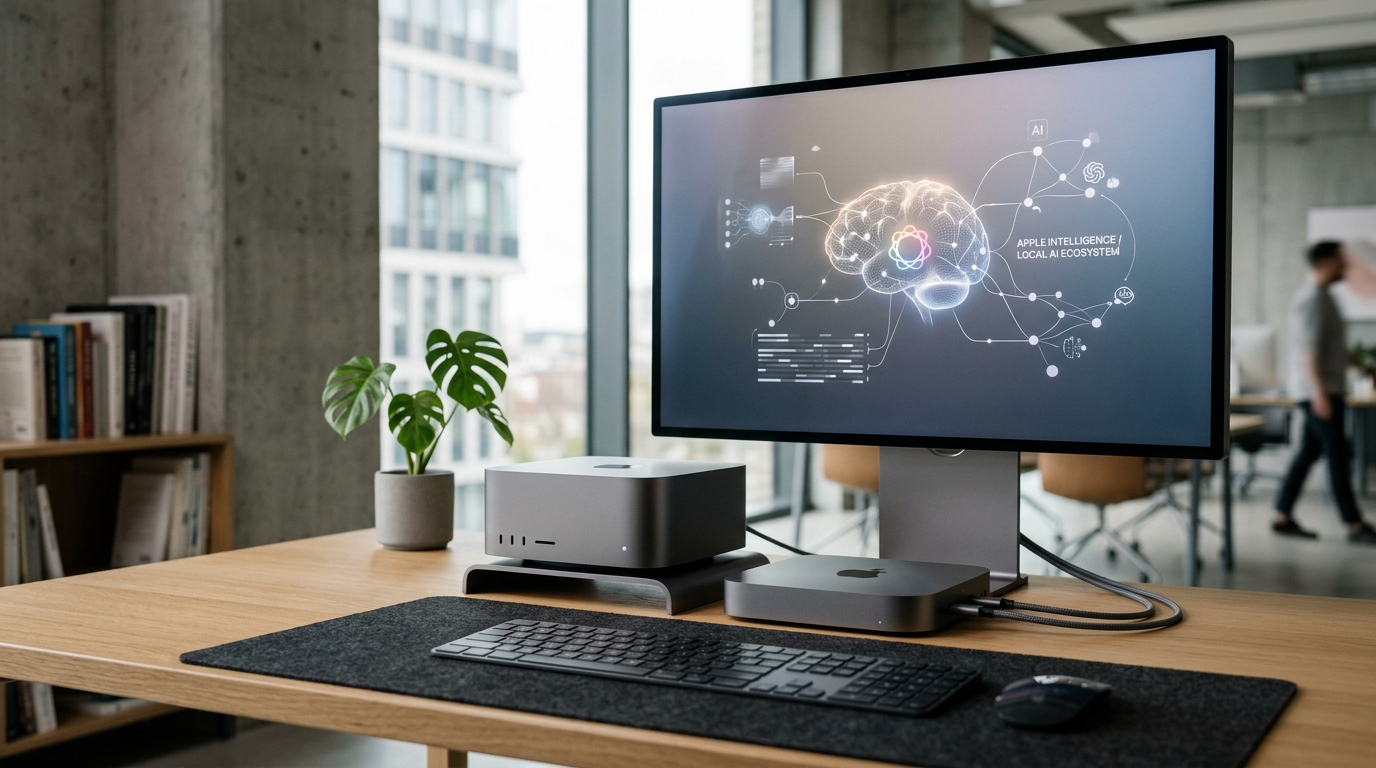
The new Mac Mini and Mac Studio aren’t just faster computers. They’re the foundation of Apple’s local AI ecosystem.
Today’s Wealth Story
Apple does not typically launch hardware in August. This release is uncharacteristic, arriving weeks before Apple’s main fall event. That decision alone is worth examining. Rather than let the Mac Mini and Mac Studio get crowded out by iPhone 18 headlines, Apple gave them a stage. Even Bloomberg’s Mark Gurman, who predicted an upgraded Mac Mini was inbound, made no mention of the M5 Ultra and Mac Studio releases. The Mac Pro was quietly retired in March 2026. The Mac Studio with M5 Ultra is now Apple’s most powerful desktop, and it is priced accordingly.
The Bigger Picture
Over the last few years, AI enthusiasts have been buying Mac Minis in bulk to run local models and AI assistants. With the M6 chip, Apple’s first 2nm design, the company is making the Mac Mini an even more capable AI workhorse. The M6 sports a dual 16-core Neural Engine, delivering double the AI processing power of the M5. That is a meaningful jump for anyone running large language models without a cloud subscription.
The M5 Ultra combines two dual-die M5 Max processors through Apple’s UltraFusion interface, creating the company’s first four-die M-series design. A Mac Studio with M5 Ultra can be configured to 512GB of unified memory, enough to hold open-weight models with hundreds of billions of parameters in RAM. For AI researchers and developers running frontier-scale workloads locally, that matters more than almost any other spec on the sheet.
Elon Musk’s $2.1 Trillion Hit List
The SpaceX IPO made Elon Musk the wealthiest man who has ever lived.
Now he’s spending it to complete his dynasty…
He’s already acquired a $40 billion AI firm and a $1 billion turbine company.
But a handful of companies still stand between him and total control of the space economy.
Click here to see why early investors could walk away with a fortune.
The Investment Case
Apple’s Mac segment is not the company’s growth engine, but it is a margin contributor and an ecosystem anchor. Pricing on both machines has moved up. The Mac Mini now starts at $899 with M6, $100 more than before, with a base 256GB of storage. The M5 Ultra Mac Studio starts at $5,499, and the price increase makes it $1,500 more expensive than the previous Ultra model was at its launch in March 2025.
Apple is threading a needle: charging more while expanding the addressable market by covering a wider range of AI use cases. At $899, the Mac Mini targets the developer and AI-hobbyist segment. At $5,499, the M5 Ultra replaces the Mac Pro for professional studios. The M5 Ultra Mac Studio is filling the gap left by the removal of the Mac Pro from the lineup in March 2026. That consolidation simplifies Apple’s product grid while keeping average selling prices elevated.
Risks to Watch
The pricing increases carry real risk. The Mac Mini now ships with a meager 256GB of storage at its entry price, and buyers who need meaningful storage or memory will pay substantially more. Supply constraints compound that problem. Configurations with 512GB of unified memory will not arrive until late October, leaving the highest-demand AI configurations on backorder through the fall. If those shortages persist into holiday season, Apple risks leaving revenue on the table precisely when buyer intent is highest.
Wealth Takeaway
The shift to on-device AI is not a future trend. It is happening right now, and Apple is building the hardware stack to own it at every price point. Companies that control the silicon, the software, and the ecosystem tend to capture the most durable margins over a full product cycle. Today’s desktop launches are one more data point in a long argument for holding AAPL as a core position, not trading it on quarterly noise.