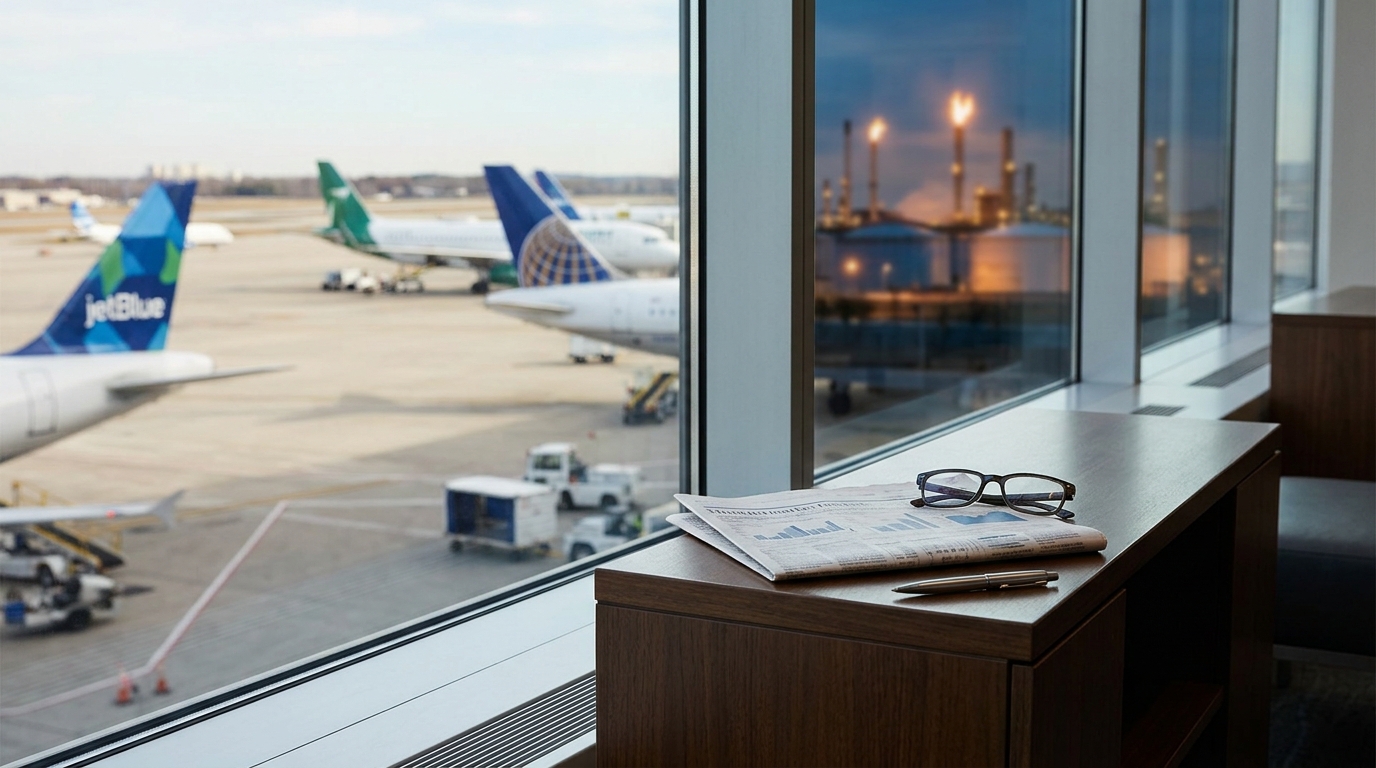
Monday looked like a turning point. Brent crude futures settled $8.66, or 7.63%, lower at $104.77 a barrel after Trump raised doubts about whether he would follow through on a threatened resumption of military strikes against Iran and said a deal with Tehran could happen. Airline stocks exploded higher on the news. JetBlue surged 11% and United climbed 6% as crude dropped over 4% on hopes that U.S.-Iran diplomacy would ease energy supply fears. Delta Air Lines stock rose 5% to $83.96.
That was Monday. By the time Asian markets opened Tuesday, the calculus had shifted entirely.
The attack was first reported by the Wall Street Journal, while Iranian state media said there were several explosions on Qeshm Island, situated in the Strait of Hormuz. It was the latest in a series of limited strikes carried out by Washington in recent weeks, kept deliberately low-profile so as not to signal any intent of resuming a major military campaign against Iran. U.S. officials characterized the operation as defensive and intended to prevent Iranian forces from targeting commercial merchant vessels.
The oil market reacted immediately. The abrupt escalation reversed Monday’s broad commodity sell-off, lifting Brent crude futures 1.76% to $106.61 a barrel and West Texas Intermediate 1.66% to $98.06. By Tuesday midday, Brent was trading 2.03% higher at nearly $107 a barrel.
KCM Trade’s chief market analyst Tim Waterer put it plainly: “The report added a degree of risk premium back into the oil price. Just when markets were starting to price in a more diplomatic path, this reminder of ongoing military activity has flipped the tone.”
The diplomatic picture remains opaque, which is precisely the problem for traders building positions around a clean resolution. Tehran said on Monday that contacts between Iran and the U.S. to end their war are continuing, after days of Iranian talks with Qatari mediators ended with altered proposals but no breakthrough. A senior Iranian official told Reuters that negotiations remain far from a resolution, adding that Tehran would refuse to accept Washington’s “excessive demands.” The Qeshm strike, occurring the same evening Trump publicly signalled more diplomatic time, reveals a gap between presidential messaging and operational military reality.
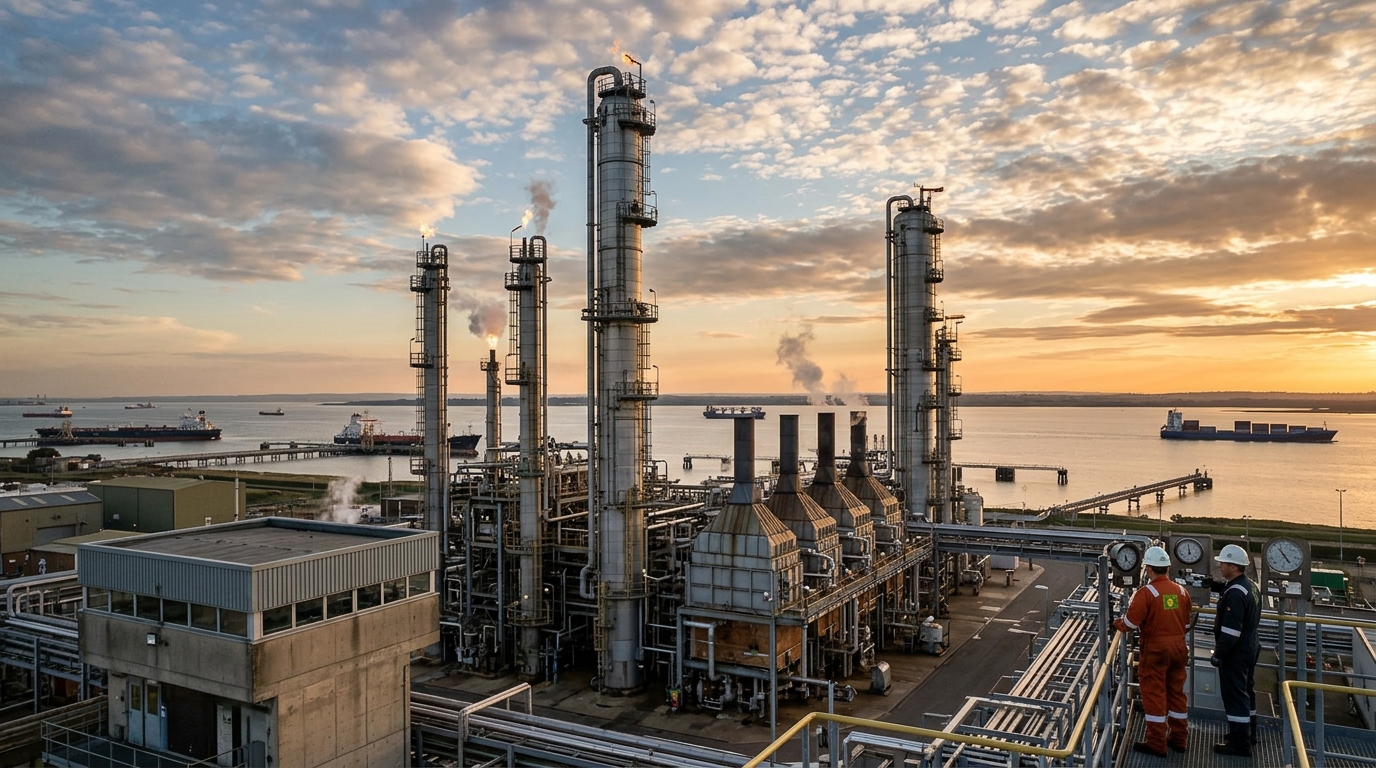
The U.S.-Iran conflict, which began in late February, has sharply reduced traffic through the Strait of Hormuz, which previously carried about a fifth of the world’s oil supply. That chokepoint is the entire reason the war premium exists, and the Qeshm strike lands squarely at its mouth.
For airlines, the whipsaw is damaging in both directions. Monday’s rally in JBLU, UAL, DAL, and AAL was built on a fuel cost outlook that evaporated overnight. JetBlue paid $3.91 a gallon for fuel in the third quarter, 57% more than a year earlier, and guided to an adjusted operating margin of (4.5%) to (6.5%) in the fourth quarter. JetBlue’s fourth-quarter guidance assumes fuel at $4.64 a gallon, meaning a sustained return toward $107 Brent tightens that assumption considerably. The larger carriers have buffer. JetBlue does not.
On the energy side, Exxon Mobil fell 3.50% and Chevron dropped 3.24% on Monday as the broader energy sector declined 3.73% alongside the crude selloff. With Brent reclaiming ground Tuesday, both XOM and CVX are positioned to recover those losses, and the thesis for holding integrated energy names through elevated Hormuz risk strengthens the longer diplomacy stalls.
The trading plan here separates into two distinct books. For energy, Brent holding above $105 with the Qeshm Island situation unresolved keeps the war premium partially in place. XOM and CVX are direct beneficiaries if crude sustains above $106. Watch whether Brent can reclaim the October high above $117 if diplomatic talks formally collapse post-midterms. For airlines, the Monday gap-up in JBLU, DAL, UAL, and AAL was a peace-trade, not a fundamental rerating. Any positions entered Monday on peace optimism carry asymmetric downside if the Qeshm situation broadens. The risk is not symmetric: crude can spike faster than airline margins can absorb it.
The midterms today add a third variable. The Iran war is a leading cause of high gasoline prices weighing on voters, and Trump is under pressure to end the conflict. Post-midterm, that political pressure either intensifies or loosens depending on the results. Either outcome changes the probability distribution for diplomacy over the next 30 days. Until that clears, treating crude’s range as $103 to $108 and fading the extremes is the more defensible posture than pressing directional bets on either the peace trade or the escalation trade.