AutoZone’s brand identity is built on the self-reliant driver changing their own oil on a Saturday morning. The data from fiscal 2026 tells a more complicated story, and investors who miss the shift may be anchoring to the wrong thesis.
AutoZone topped $20 billion in annual sales for the first time, opened 374 new stores, and posted 15.1% Q4 earnings-per-share growth, though soft DIY demand tempered the outlook. The DIY result is where most commentary stopped. It shouldn’t be.
Domestic DIY same-store sales declined 0.6% in Q4, driven by lower foot traffic, with management noting that “transactions are soft as the customer experiences high inflation” and pointing to evidence of trade-downs and deferrals. That is not what a clean defensive story looks like. The consumer under pressure is not rushing to AutoZone to save money on labor; they are deferring the repair entirely.
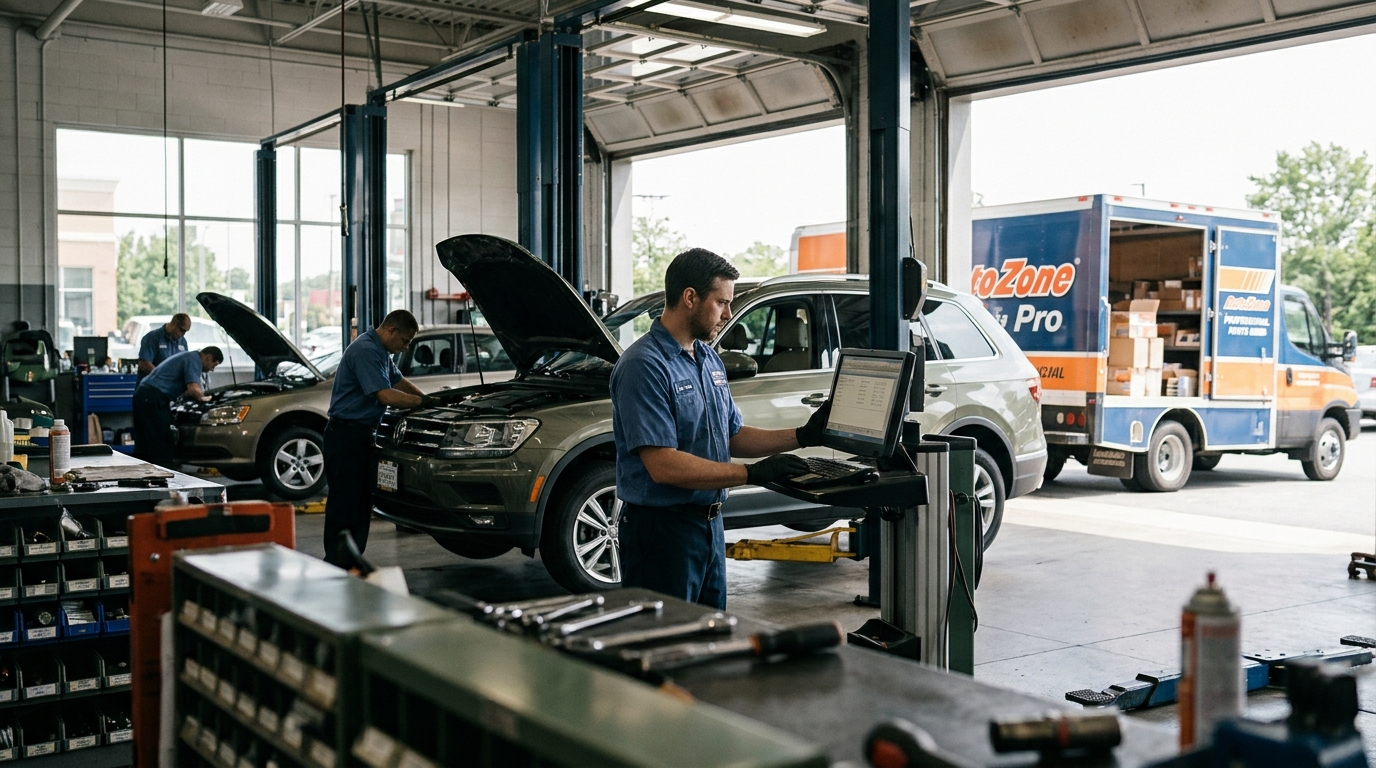
Domestic commercial, or Do It For Me, sales reached about $1.9 billion for the quarter, representing 34% of domestic auto parts sales and 29% of total company sales. For the full fiscal year, domestic commercial sales increased $550.1 million, or 10.6%, compared to fiscal 2025. The professional repair channel is not a supplement to the DIY business anymore; it is the growth driver.
AutoZone has said that even with domestic commercial growth of about 11% in fiscal 2026, it still has less than 5% share in what it has described as a $100 billion-plus professional market. That runway is enormous, and management has been explicit about targeting it. The company has said it sees total domestic commercial sales growing high single to low double digits in fiscal 2027.
This repositioning carries real execution risk, and now there is a leadership variable attached to it. CFO Jamere Jackson resigned effective November 25, 2026, after which he is expected to assume the CFO position at FedEx Corporation. Vice President and Controller J. Scott Murphy will assume principal accounting and principal financial officer responsibilities, while the company conducts an external search for a permanent successor. Jackson oversaw the commercial buildout; his exit creates uncertainty around capital allocation discipline precisely when AutoZone is accelerating store openings and Mega Hub expansion.
Management has said it plans to invest around $1.65 billion in capital expenditures in fiscal 2027, following a step-up in spending in fiscal 2026. New stores and hubs start out earning very little, and the business already carries high debt and negative shareholders’ equity. Gross margins compressed slightly year-over-year as commercial mix grew, a trade-off management has accepted in exchange for volume.
The conventional AutoZone pitch, that hard-pressed consumers fix their own cars when budgets tighten, is losing its factual foundation. DIY traffic is falling. The commercial segment is doing the work. Whether AutoZone can hold its margin profile through a CFO transition while investing around $1.65 billion on new stores is the question fiscal 2027 Q1 results need to answer.