Hey there, bargain hunter. Forget the AI software debate for a second. The real bottleneck in the artificial intelligence build-out isn’t chips or models. It’s electricity.
Data centers already consume roughly 19 gigawatts of U.S. electricity. The Federal Energy Regulatory Commission projects that number climbs to 35 gigawatts by 2030. Hyperscalers – your Microsofts, Metas, Googles – are projected to spend nearly $500 billion on capital expenditures in 2026 alone. A meaningful slice of that spend is going toward securing reliable, carbon-free power for the long term.
Which brings us to nuclear. And specifically to Constellation Energy (CEG).
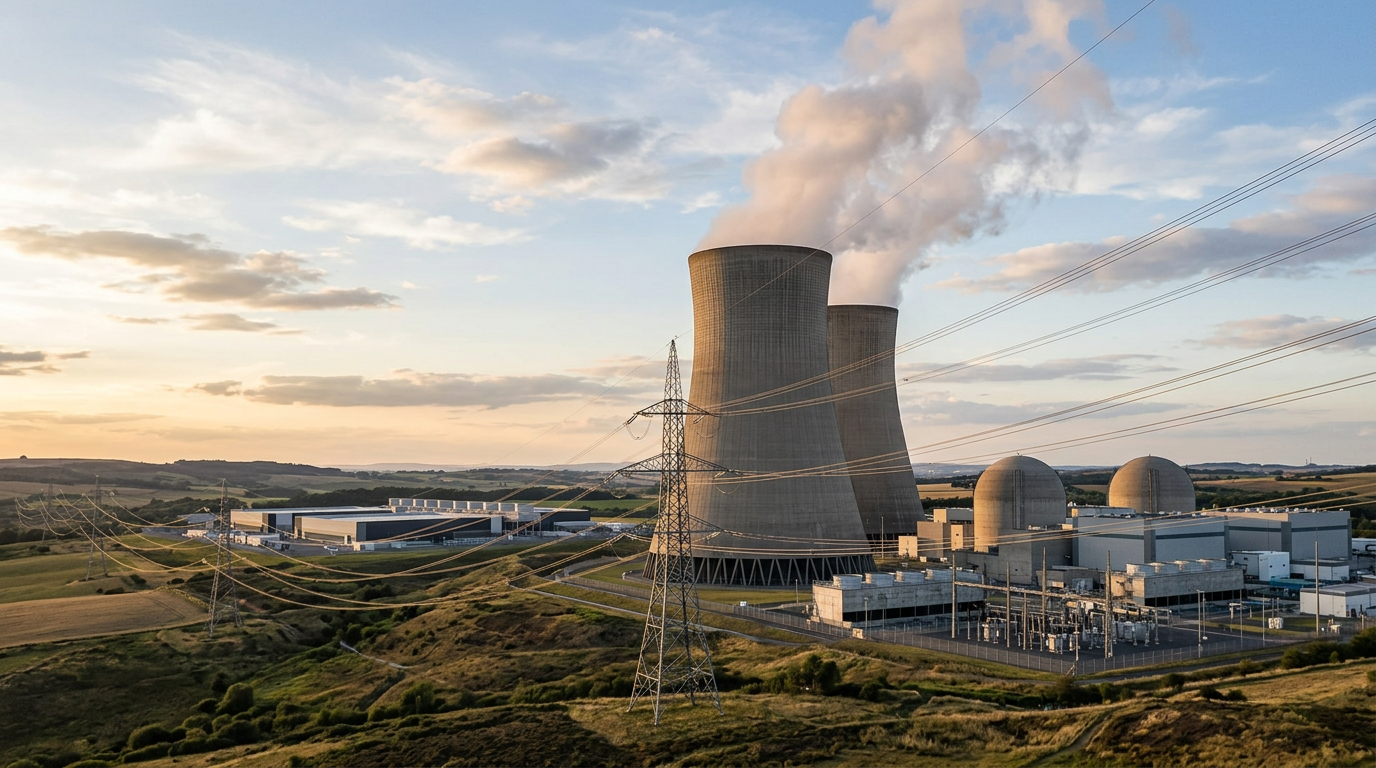
CEG is now the largest private-sector power producer in the world, operating 55 gigawatts of capacity after completing its Calpine acquisition in January 2026. It runs 21 nuclear reactors across 12 sites, serving roughly 2.5 million customer accounts including 80% of the Fortune 100. The fleet hit a 98.8% operating rate through the summer of 2025 – that’s not a utility, that’s a machine.
The deals keep coming. Microsoft signed a 20-year agreement to restart Three Mile Island for AI data center power. Meta signed a separate 20-year, 1.1 gigawatt nuclear supply deal starting in 2027. These aren’t publicity stunts – they’re locked-in revenue streams that most utilities can only dream about. Analysts tracking the most optimistic scenario see revenue potentially reaching $44 billion and earnings around $8 billion by 2029.
Here’s the part people skip. The stock closed at roughly $301 on May 26, 2026. The 52-week high was $412. That’s a 25%-plus drawdown from the top – on a company that just reported Q1 2026 results demonstrating continued operational excellence, a freshly declared dividend of $0.4265 per share payable in June, and an EPS growth projection of 25% for 2026. Morgan Stanley maintained an Overweight rating just this week.
The valuation sits around 24-25x trailing earnings – not cheap by utility standards, but this is not a standard utility. It’s the company signing long-duration, carbon-free power contracts with the most cash-rich corporations on the planet.
The risk is real: nuclear maintenance costs can spike, regulatory frameworks are still evolving despite four Trump executive orders targeting expansion to 400 gigawatts by 2050, and the Calpine integration is still fresh. A rate reset in wholesale power markets could also pressure near-term economics.
But the structural setup is hard to argue with. AI runs on energy. The grid can’t build fast enough. Nuclear is the only baseload, zero-carbon option that can scale to meet the demand. And CEG is sitting at the center of all of it, trading well off its highs.
The boring business of selling electrons just became one of the most interesting trades in the market. Start here.