
September 8, 2026
Office vacancies near 20% are turning loan renewals into losses, and smaller lenders have less room to maneuver.
The maturity clock ran out on a lot of optimism this year. The Mortgage Bankers Association puts commercial and multifamily mortgage maturities scheduled for 2026 at $875 billion. A large share of that debt sits on the books of lenders most people have never heard of, in cities where office towers stand half-empty.
Trump’s Secret Plan to Unlock $7.5 Trillion for Patriots?
With this audacious move, President Trump could seal his historic legacy.
Minting a whole new generation of American millionaires in the process.
And nobody is paying attention.
But in this jaw-dropping new video, one ex-Wall Street insider exposes the smoking gun evidence that a Trump-approved $7.5 trillion tsunami is about to hit the markets.
Including a personal letter, written by President Trump himself, revealing why phase one of this secret plan could be just days away.
Click here for full details on the secret plan to unlock $7.5 trillion for American investors NOW.
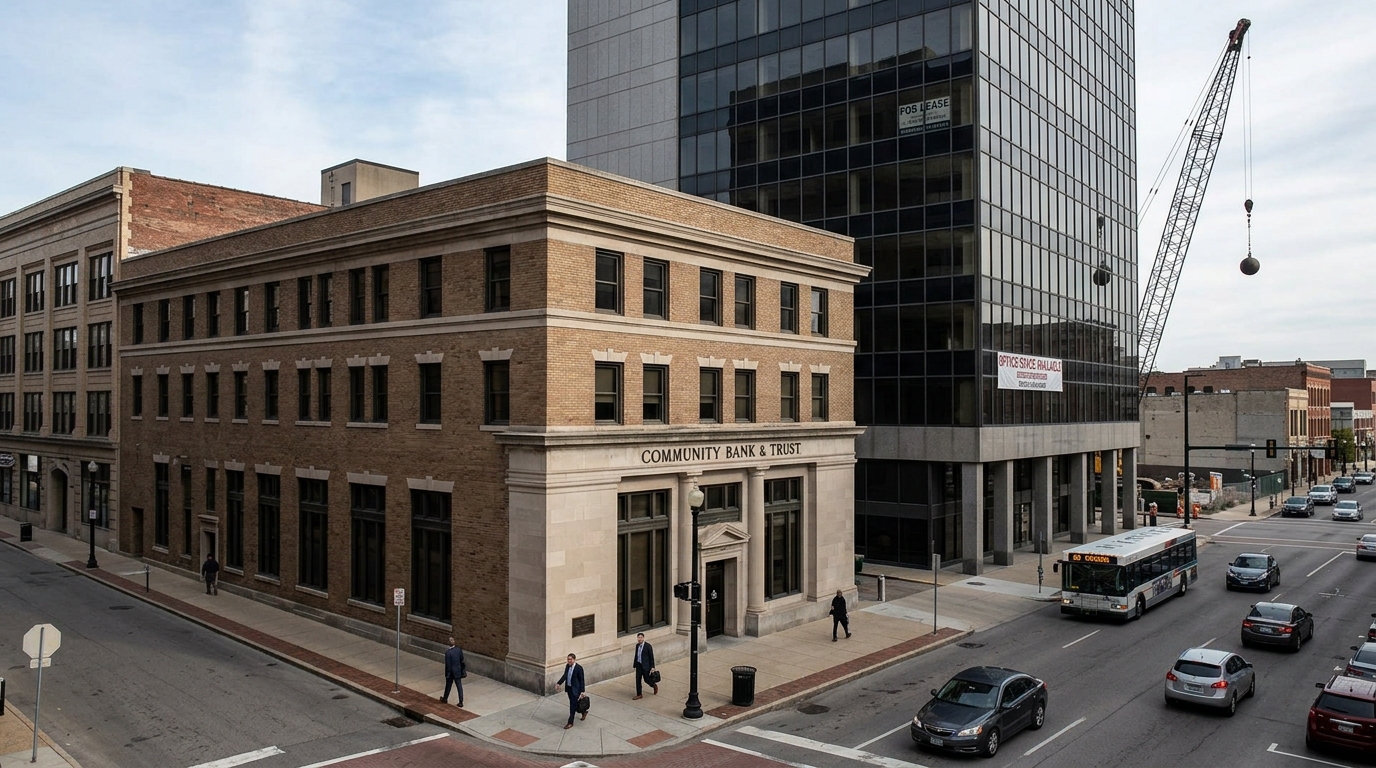
Three forces have converged to create the stress: remote work permanently reduced office demand, office vacancy rates are near 20% nationally, and many office buildings are now worth 30 to 50 percent less than their peak values. That is not a market cycle. It is a structural reset, and regional banks absorbed most of the risk when it was being written.
Collectively, over $1.6 trillion of commercial real estate loans sit on the balance sheets of regional banks. Three of four regional banks report commercial mortgages as their largest loan category, and for nearly half, their CRE concentration exceeds thresholds of potential regulatory concern.
Did Trump Draw a Red Line Around This Mystery Stock?
When a major U.S. trading partner targeted one American energy company’s profits, Trump publicly warned it was making a “big mistake.”
Why defend this company?
The mechanics of the problem are straightforward, even if the losses are not yet. When loans come due, borrowers must refinance at higher rates or sell properties at lower values. If they cannot, the bank takes a loss. Smaller banks with concentrated CRE portfolios have their work cut out for them in particular. They are more susceptible to the downturn in CRE markets, especially office, and if losses prove too large to cover, lending standards could tighten across the board, restricting capital beyond just real estate.
The stress is not evenly distributed, which is precisely what makes it hard to track. The pattern of regional bank stress in 2025 and 2026 has been characterized by individual institution events rather than systemic episodes, with specific banks facing earnings pressure, capital strain, and in some cases regulatory intervention. Federal regulators have long screened for heightened CRE concentration risk when total CRE loans reach 300% of total risk-based capital and the portfolio has grown rapidly. Many already crossed that line before the vacancy data got this bad.
The delinquency rate of office commercial mortgage-backed securities hit 11.66 percent in August 2025, the sector’s record at the time, according to Trepp. That benchmark matters because it signals where bank-held loans are likely heading.
Nuclear Energy’s Comeback Could Spark Before 2026
Global energy demand is surging and one overlooked power source is quietly returning to the spotlight. New policy support and supply constraints are setting the stage for a surprising shift in the energy markets.
For investors holding regional bank stocks, the key question is not whether a given institution has CRE exposure; nearly all of them do. The question is concentration relative to capital, the geographic mix of the underlying properties, and whether management has been candid about loss timelines. A scenario where rates decline materially over 2026 and 2027 would allow many extended loans to refinance at terms that approach the original economics. A scenario where rates hold indefinitely would force loss recognition because the underlying property cash flows cannot support modified debt service.
The wealth takeaway is this: regional bank exposure to commercial real estate is not a single event to trade around. It is a slow reckoning unfolding loan by loan, quarter by quarter. Investors who stay invested in the sector owe it to themselves to know exactly how much of a given bank’s capital is backstopped by buildings that no one is fully occupying.