October 8, 2026
Amazon’s retreat from palm checkout is being read as a cautionary tale.
When Amazon pulled its Amazon One palm readers from retail businesses on June 3 of this year, the headlines wrote themselves: biometric checkout had failed. Amazon shut down Amazon One, citing “limited customer adoption.” Critics declared the whole category dead on arrival.
Is This Elon Musk’s Next IPO?
After taking SpaceX public in the biggest IPO ever, Elon Musk is already working with a NEW startup that’s growing faster than Tesla…
Faster than SpaceX… And faster than any of Elon Musk’s previous ventures.
Bloomberg has just confirmed that this startup is moving towards “a blockbuster IPO.”
Click here to get the name completely free of charge
And Jeff Brown will also show you how to claim a pre-IPO stake for as little as $50.
They were wrong about the category. They were right that Amazon’s model had a problem.
The pay-by-palm market is projected to grow from $1.5 billion in 2026 to $12.9 billion by 2036, at a 24.1% compound annual growth rate. That does not describe a dying technology. It describes a technology that just lost one badly-positioned pioneer.
Could You Qualify for an Irish Passport?
A little-known path to Irish citizenship could be available to millions of Americans. No giving up your U.S. passport – and you may be able to apply from home.
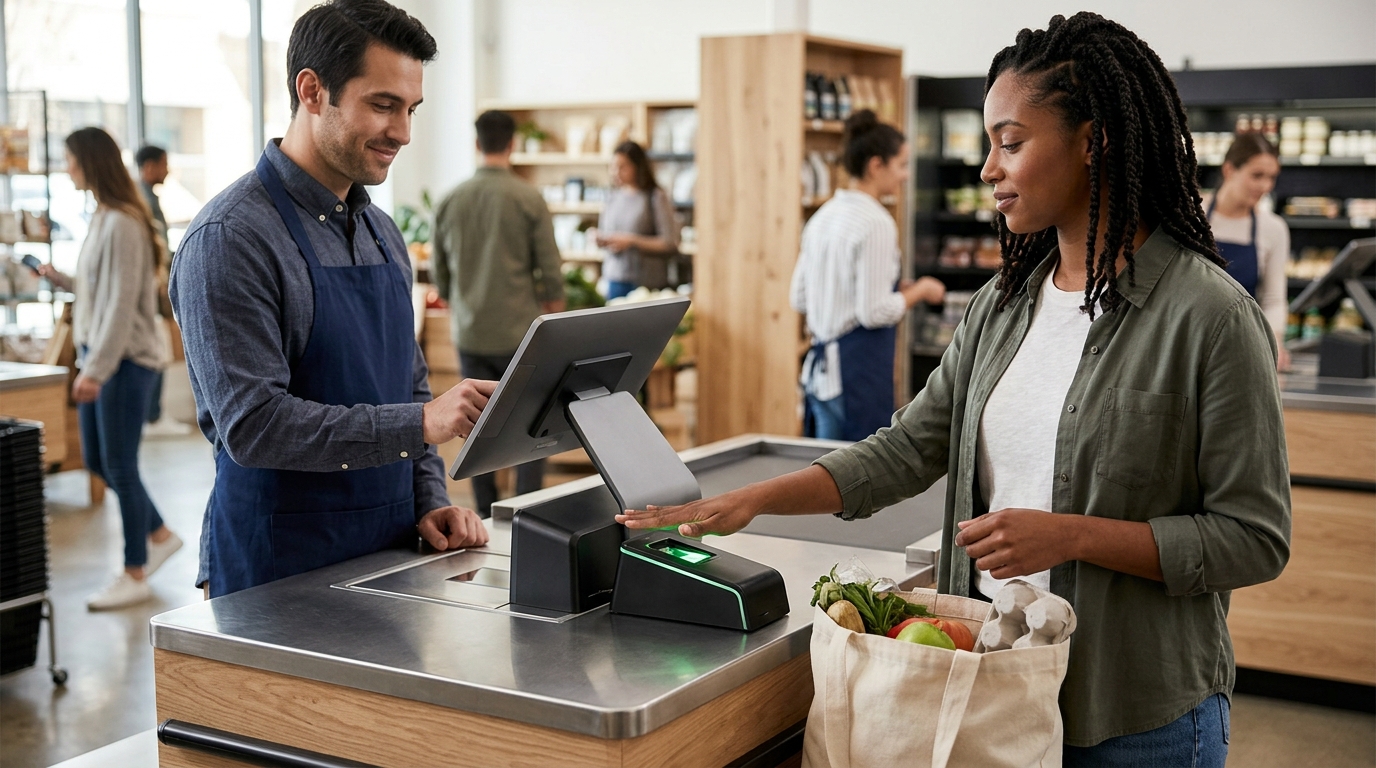
The real story is who is left standing and why their model differs. J.P. Morgan Payments has developed proprietary Paypad and Pinpad terminals with integrated palm and facial biometric capabilities. Unlike Amazon, JPMorgan does not need to enroll users in a proprietary ecosystem. It can authenticate at the terminal while still using standard card payment flows, meaning a consumer can link an existing Visa or Mastercard and use it at participating terminals without carrying a new wallet or app.
Palm payment can be fast, but the specific speed comparisons vary by implementation and the rest of the checkout flow. During peak Saturday traffic, even small time savings are not cosmetic. Shaving seconds off each transaction during high-volume periods can reduce queue anxiety, prevent basket abandonment, and lower the load on front-end staff.
The fraud angle is equally compelling and tends to get underplayed. But the claim that biometric checkout delivers “up to an 80% reduction in fraud” is not something Worldpay has consistently published as a general result, and it depends heavily on the type of fraud being measured. What is fair to say is that biometrics can reduce some forms of misuse associated with lost, stolen, or skimmed credentials because the biometric factor is tied to the person, not the card. That said, self-checkout loss remains a major pain point for grocery operators, and chip-and-PIN does not address many of the highest-frequency self-checkout scams.
Inside the Nuclear Revival Reshaping Energy Markets
Governments worldwide are investing billions to revive a proven energy source. Supply chains are tightening, demand is rising, and select companies stand to benefit. The Nuclear’s Second Act report explains what’s happening next.
Palm vein recognition is generally considered more spoof-resistant than surface biometrics because the vein pattern sits beneath the skin surface, which can make replication harder than lifting a fingerprint.
The adoption friction is real but narrowing. Unlike camera-grid cashierless systems or item-level RFID, palm payment hardware is typically a small device that can sit at an existing point-of-sale counter, which can help keep deployment costs and disruption lower. For investors, the companies supplying that hardware and authentication infrastructure, not the grocery operators adopting it, are where margin accrues. The grocery chains get faster lanes. The payment networks and terminal vendors get a new transaction fee stream on every wave of a hand.