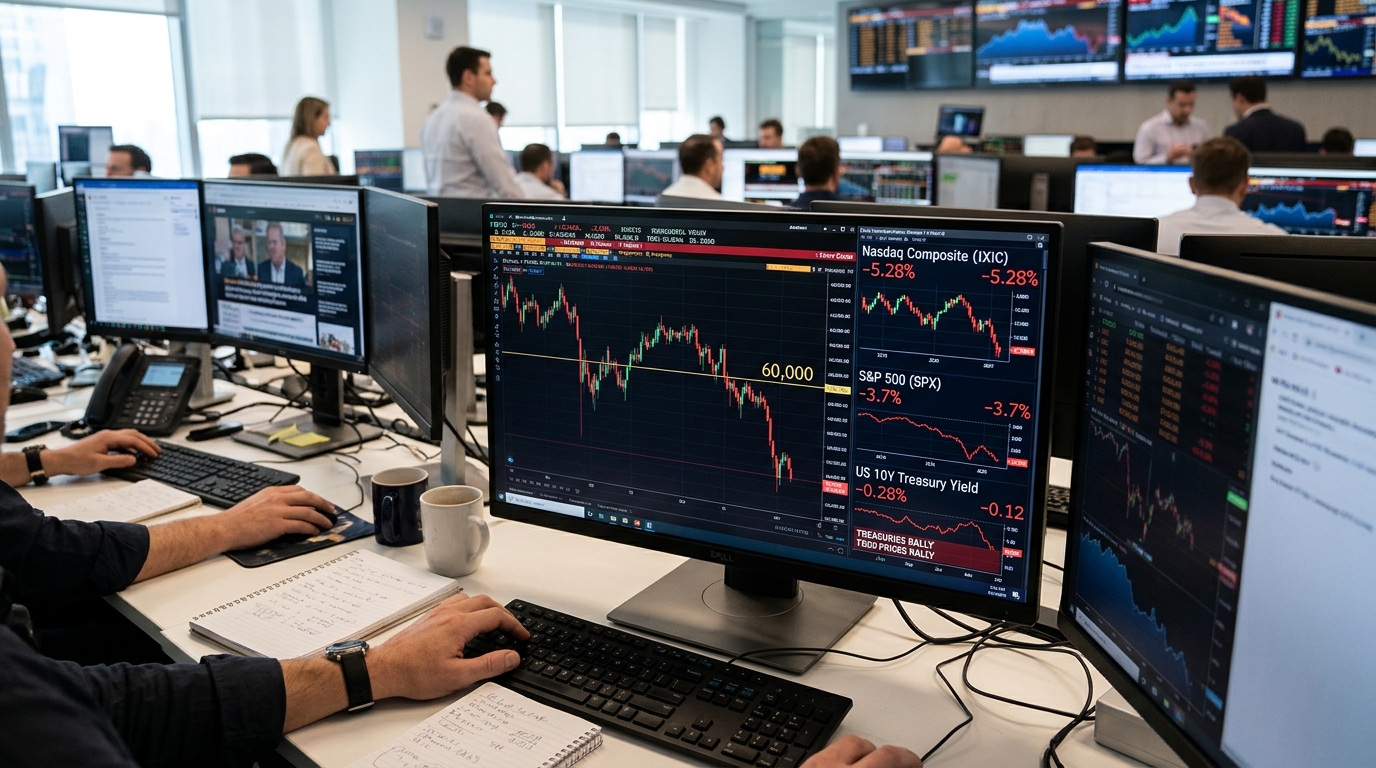
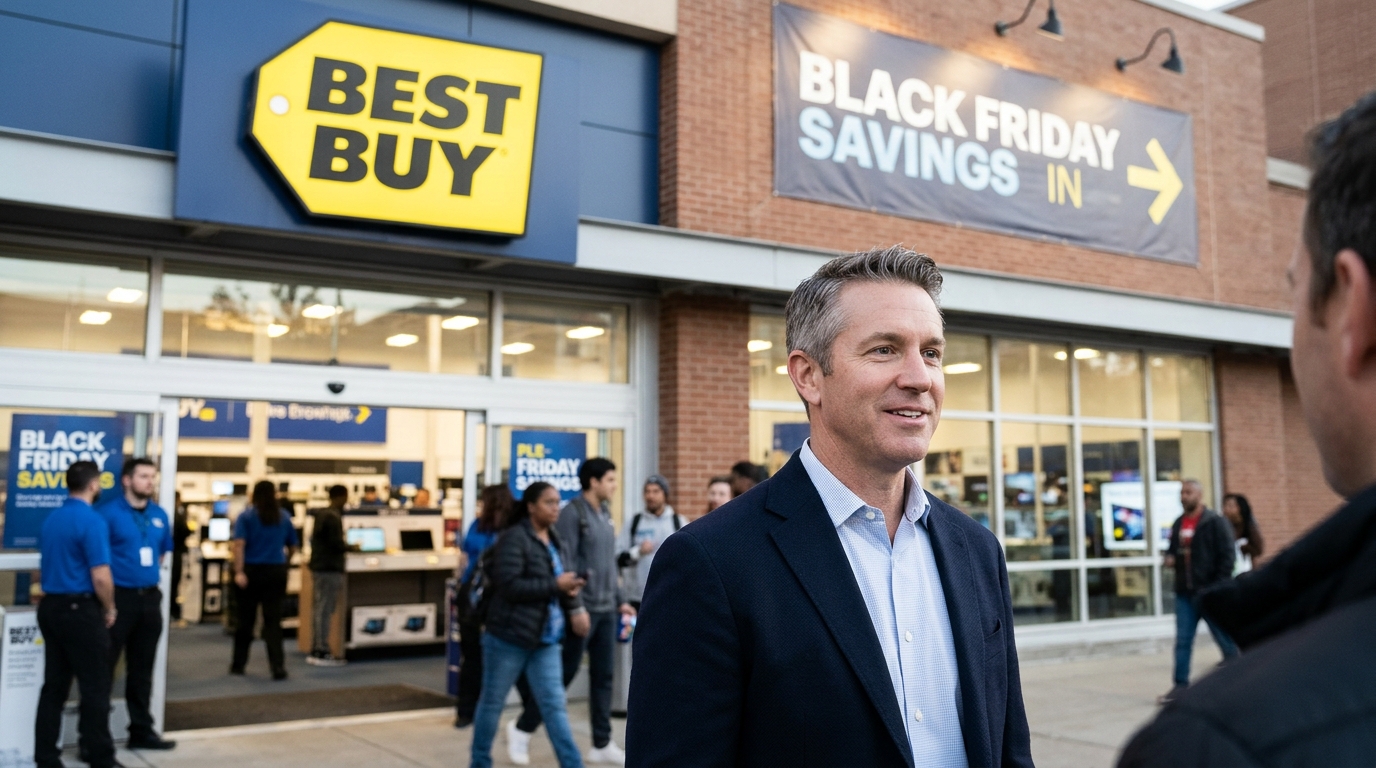
Best Buy’s fiscal third quarter results landed before markets opened Tuesday, three days before Black Friday, and four weeks into Jason Bonfig’s tenure as CEO. The timing is deliberate. Bonfig, who succeeded Corie Barry on November 1 after leading Best Buy’s customer, product and fulfillment strategy, is walking into an earnings call that will set the tone for the most critical shopping period of the retail year.
The setup heading into this morning was reasonably constructive. Last quarter, Best Buy delivered comparable sales growth of 4.1%, adjusted EPS of $1.47 beating the $1.39 estimate by $0.08, and revenue of $9.78 billion, up 3.6% year over year. That strong Q2 result led management to raise full-year comparable sales guidance to 1.9% to 3.0% and full-year adjusted EPS guidance to $6.70 to $6.90. The bar entering Q3 was consensus EPS of roughly $1.49, and consensus revenue in the neighborhood of $9.8 to $9.9 billion, implying modest earnings growth from Q3 fiscal 2026’s $1.40.
Why Wall Street Is Paying Attention
Best Buy has beaten earnings estimates in seven of its last eight quarters. That consistency, in a consumer electronics category that spent two years in a correction, reflects real execution improvement. AI-enabled devices, including smart glasses and upgraded computing categories, have been driving real unit demand. Channel checks in August and September were strong, though October reportedly softened.
The stock tells a different story than the fundamentals. BBY is trading near $97, roughly 9% below its 52-week high of $106.83. The 52-week low of $55.10 set in May is not visible from here, but the stock is also sitting above the average analyst price target of $91.29. With management’s full-year fiscal 2027 guidance midpoint implying around $6.80 in adjusted EPS, the stock trades at roughly 14 times forward earnings.
What’s Driving the Opportunity
Three things could move the stock from this morning’s report. First, comparable sales: the full-year guidance range calls for 1.9% to 3.0% growth. Anything that supports the high end would likely trigger positive revisions. Second, holiday guidance: Black Friday, Cyber Monday, and the December 25 sell-through period will determine whether Bonfig gets a clear runway into fiscal 2028 or walks into headwinds. Third, gross margin: investors will assess whether the underlying rate is holding as tariff-related items flow through the model.
The category tailwinds remain intact. TV replacement cycles, AI-integrated laptops, mobile device upgrades, and a returning appetite for large appliances in a housing market that is finally showing signs of thaw all support low-to-mid single digit comparable sales growth through fiscal 2027.
What Could Go Wrong
Input cost volatility remains a risk. Higher memory costs are a common margin pressure point across the PC supply chain, and any gross margin miss would blunt the benefit of an EPS beat. Consumer softness in October, if it continued into November, would also undercut the holiday outlook and potentially trigger a guidance cut to the full-year range.
Bonfig is untested as a public company CEO. His first call may be less polished than Barry’s, and any stumble on the Q&A will get disproportionate attention from investors already cautious about the transition.
The Bottom Line
Best Buy is not a flashy business. It is a durable one with a returning growth profile, a shareholder-friendly capital return program, and about a 4.0% dividend yield. At roughly 14 times forward earnings, three days before the most important sales week of its fiscal year, it deserves attention today.