The decision itself is settled. Fed funds futures assign a high probability that Kevin Warsh holds the target range at 3.75% to 4.00% when the FOMC statement drops at 2pm ET. What is not settled is the language around that hold, and the vote count. Both will move markets more than the rate outcome.
Here is the framework for the next four hours.
The Dissent Count Is the First Tell
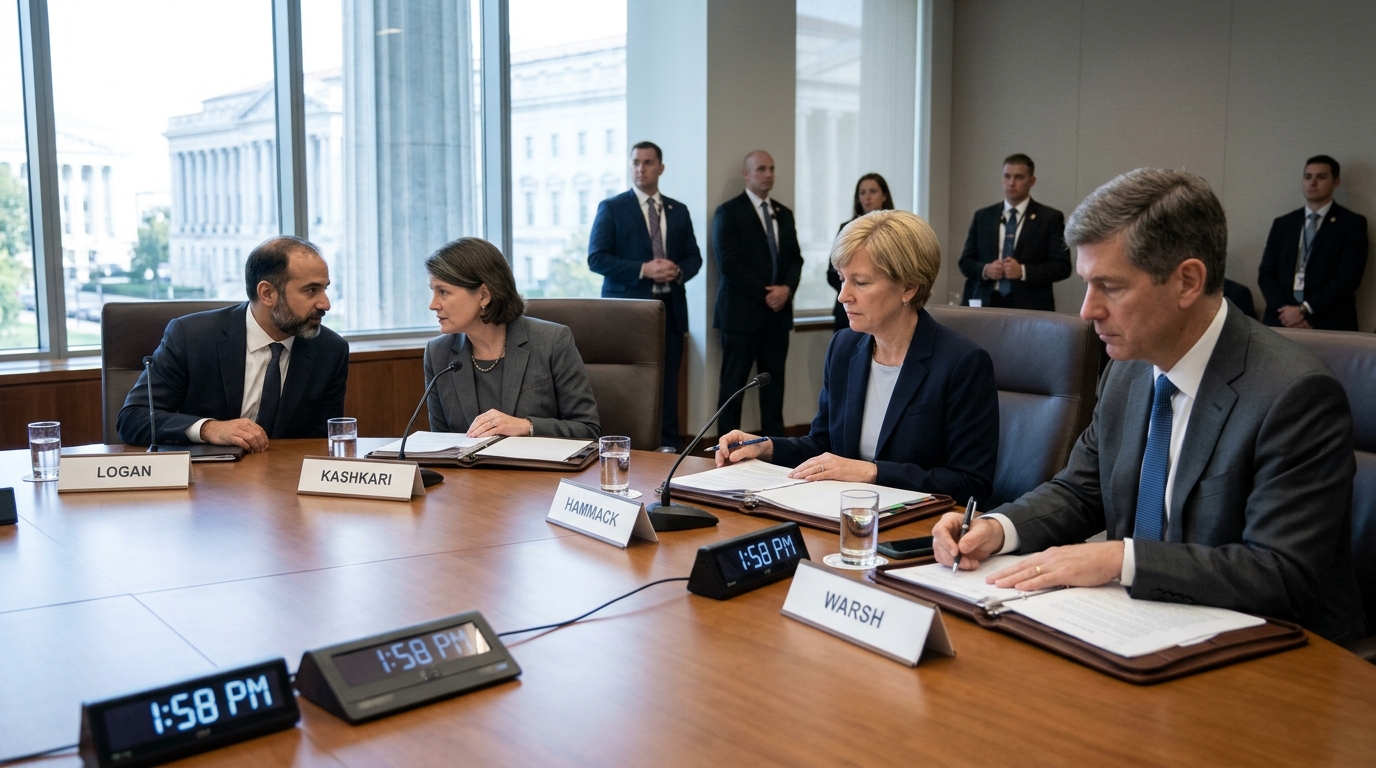
At the July meeting, Hammack, Kashkari and Logan dissented in favor of a 25-basis-point hike. Natixis economists write that they expect all three to repeat those dissents today. Rabobank holds the same view. A second consecutive three-dissenter hold does not read as noise. It reads as an organised regional bloc signalling that the majority is moving too slowly, and markets have historically taken that seriously.
Logan has argued rates need to rise further. Hammack says current policy is not sufficiently restrictive. Kashkari has signalled he could support additional tightening if inflation does not cool. Three dissents confirmed would harden the December trade immediately.
The Statement Wording Is the Second Tell
This is a non-SEP meeting: no dot plot, no updated economic projections, no fresh median rate forecast. Warsh’s words carry the full weight of forward guidance. At September’s press conference he said he would be “hard-pressed” to describe financial conditions as restrictive.
September CPI was forecast around 3.6% year over year by major bank economists. PCE inflation is expected to run in the mid-3% range near term. If the statement retains language that inflation “remains elevated” and that further tightening “may be appropriate,” the market reads hawkish pause. If Warsh softens that framing, December hike odds will slide fast.
What Moves and in Which Direction
Short-dated Treasuries. The two-year yield, sitting near 4.70%, is the most sensitive instrument in the room. It tracks near-term Fed expectations directly. Three dissents plus firm inflation language pushes it higher. A cautious Warsh who avoids committing to December sends it lower, and that move will be sharper given how much tightening is already priced.
The 10-year. It came back to just under 5.00% on Tuesday and closed the session near 4.99%. The 10-year breached 5.30% earlier this month, a level not seen in over two decades, before pulling back. A hawkish statement reopens that range. TLT, which has absorbed consistent selling pressure since September’s hike, faces renewed downside if the statement confirms December.
The dollar. MUFG notes that hawkish rhetoric is broadly expected, so a surprise dovish tilt would hit the dollar harder than a hawkish confirmation would lift it. If Warsh signals December clearly, dollar strength persists into the midterms. A cautious tone unlocks relief in EUR/USD and GBP/USD.
Sector leadership. A hawkish hold keeps financials and energy in the driver’s seat heading into Election Day. Rate-sensitive growth and technology remain under pressure. Any dovish surprise shifts rotation back toward high-multiple tech and semiconductors, where valuations benefit most from lower terminal rate expectations.
The Trading Plan
The highest-conviction trade is positioned around the statement rather than the outcome. Hold is priced. What is not fully priced is a third consecutive hawkish dissent bloc plus language that pins December as the operative meeting. If that combination arrives, short TLT, stay long the dollar, and avoid adding to growth-factor exposure before Warsh wraps his press conference at approximately 2:30pm.
The risk to the trade: Warsh is known for deliberate ambiguity. If the statement bends toward data dependence without committing to December, the first move in yields and the dollar may reverse sharply within the hour. Size accordingly, and watch the two-year yield in real time as the statement publishes. It will tell you everything the statement just said, faster than any headline will.