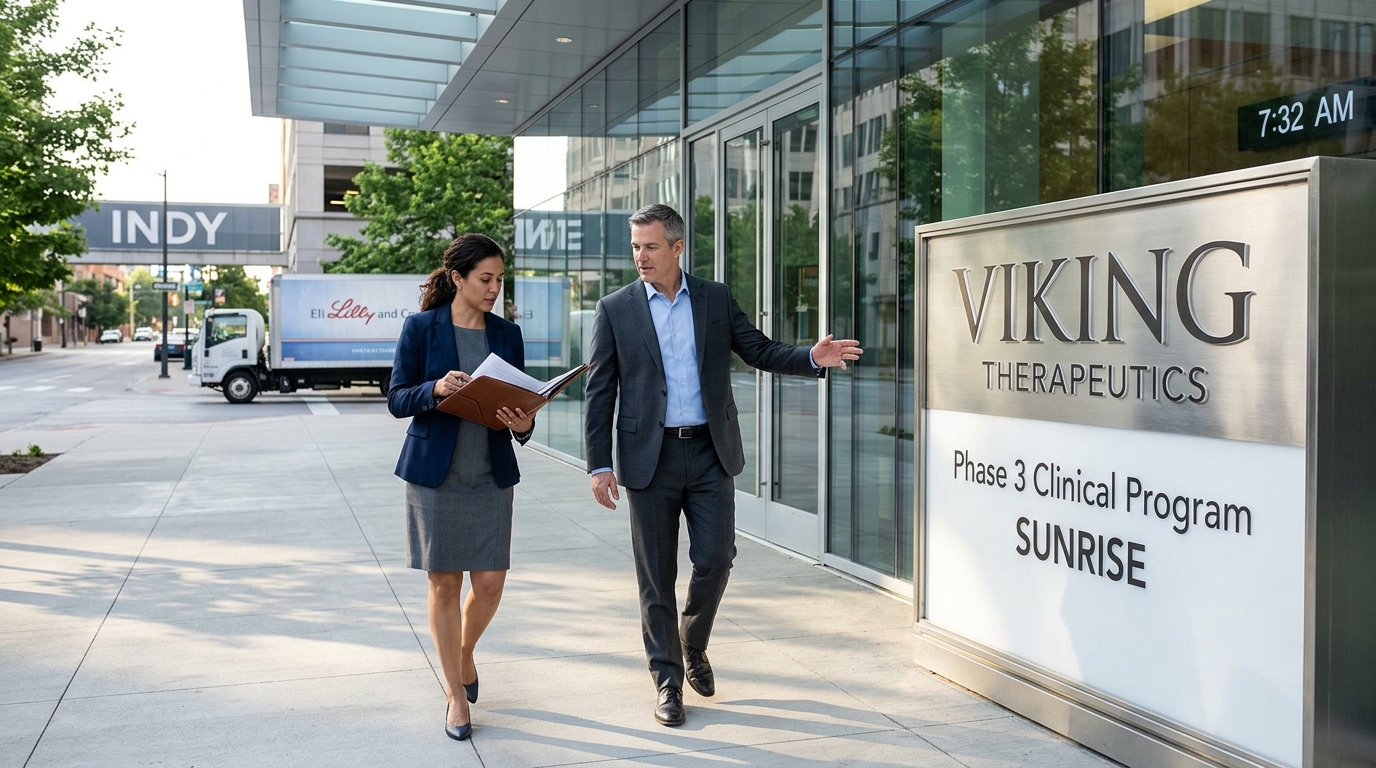
The acquisition calculus around Viking Therapeutics shifted materially on October 14, 2026. That is when Viking launched SUNRISE, its Phase 3 clinical program for once-daily oral VK2735, completing a transition from single-asset injectable biotech to a two-platform obesity company operating three simultaneous late-stage trials. The price of any deal just got higher. The strategic logic for Eli Lilly just got stronger.
Start with where Lilly stands. Mounjaro and Zepbound accounted for 65% of Lilly’s total revenue for the first half of 2026. Lilly held 60.9% of the U.S. obesity and diabetes drug market in the second quarter. That concentration is both the company’s greatest strength and a structural vulnerability. Every challenger that reaches Phase 3 is a direct threat to the franchise supporting a $85-to-$87 billion revenue outlook for the year.
The Asset Is More Complete Than It Was Six Months Ago
Viking’s SUNRISE Phase 3 program, initiated October 14, 2026, includes two studies evaluating oral VK2735: one in adults with obesity and another in obese or overweight adults with type 2 diabetes, each a randomized, double-blind, placebo-controlled multicenter trial running 68 weeks. That follows maintenance data released September 22, 2026 showing something the GLP-1 market rarely sees: VK2735 produced mean weight loss of approximately 16 to 19% versus approximately 0% for placebo across 21 weeks of induction, with 65% of treated participants achieving at least 15% weight loss and 32% achieving at least 20%.
The maintenance phase added a commercial argument the injectable data alone could not make. Patients retained between 90% and 97% of weight loss during maintenance dosing, a potential edge over existing GLP-1 therapies. Patients who do not regain weight between doses are patients who stay on therapy, and payers who see that data write larger formulary checks.
The Hidden Tension in Lilly’s Position
The conventional M&A framing treats this as a capacity story: Lilly buys Viking to prevent a rival from owning VK2735. That is true, but incomplete. In the second quarter of 2026, Lilly reported total revenue of $23.0 billion; Mounjaro revenue was $9.9 billion. Lilly does not report Zepbound revenue in that same Q2 2026 release as a single worldwide line item, so any specific Q2 total for “Mounjaro and Zepbound combined” should be treated cautiously. Still, the company has disclosed that Mounjaro and Zepbound together accounted for 65% of total revenue in the first half of 2026, underscoring how reliant Lilly is on tirzepatide at a time when realized prices are under pressure.
The antitrust complication is real. A second obesity platform adds optionality for Lilly, though antitrust optics complicate the fit at its roughly $1.1 to $1.2 trillion market cap. Regulators will ask whether the dominant player buying the most credible challenger forecloses competition. Viking’s management appears to be reading that risk correctly. The appointment of Neil Aubuchon, a nearly 17-year Eli Lilly veteran, as Chief Commercial Officer signals that Viking is no longer limited to hoping for an acquisition but is actively preparing for a go-to-market strategy.
What the Q3 Report Tonight Reveals
Viking reports third-quarter results today, October 28, 2026. Shares have fallen about 41% over the past month, so management must make the case for its newly launched oral Phase 3 program on this call. R&D costs are rising as VANQUISH-1 and VANQUISH-2 enroll alongside SUNRISE, making spending guidance critical.
A weak cash guidance update could push the stock lower and make an acquisition cheaper. Strong enrollment pace for SUNRISE would do the opposite. Either outcome changes the terms of any conversation Lilly is having internally. The selloff has compressed the entry point. The science has not compressed at all.