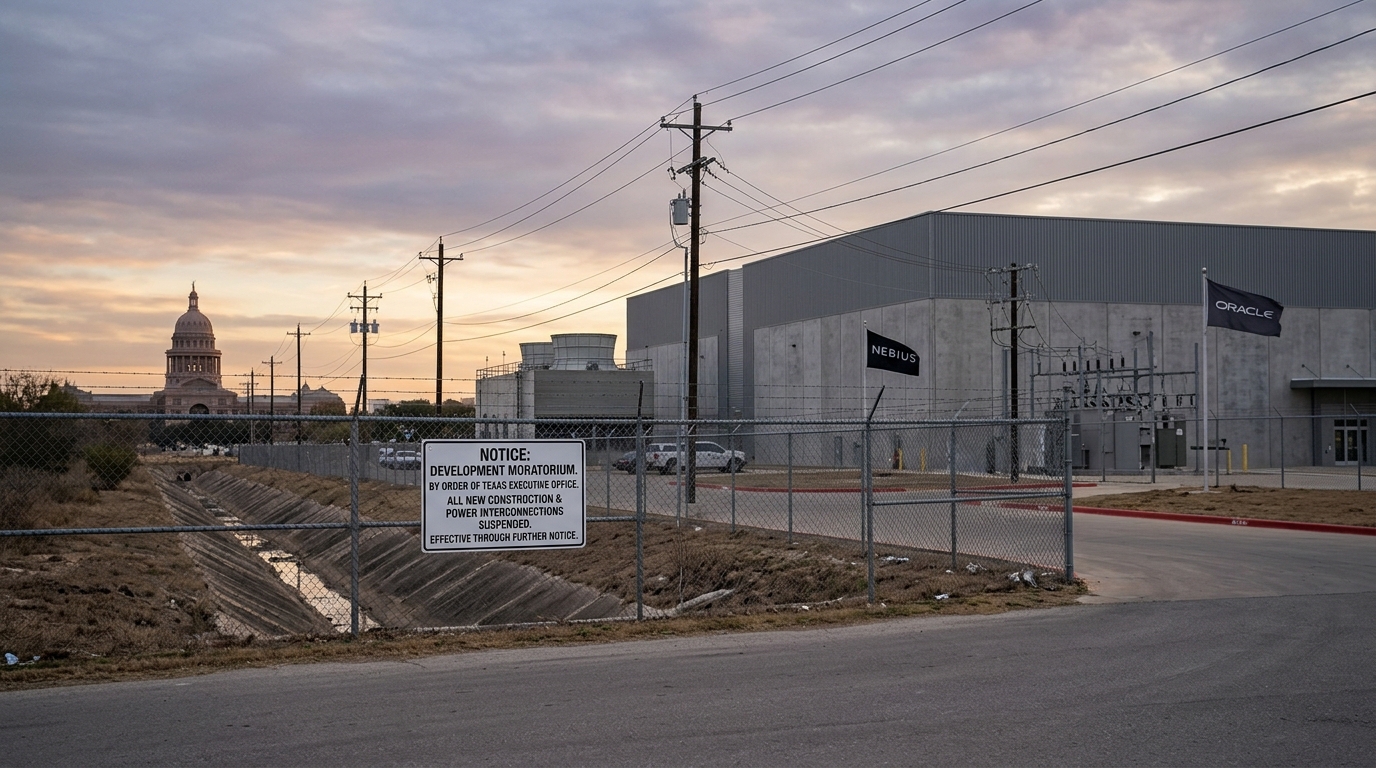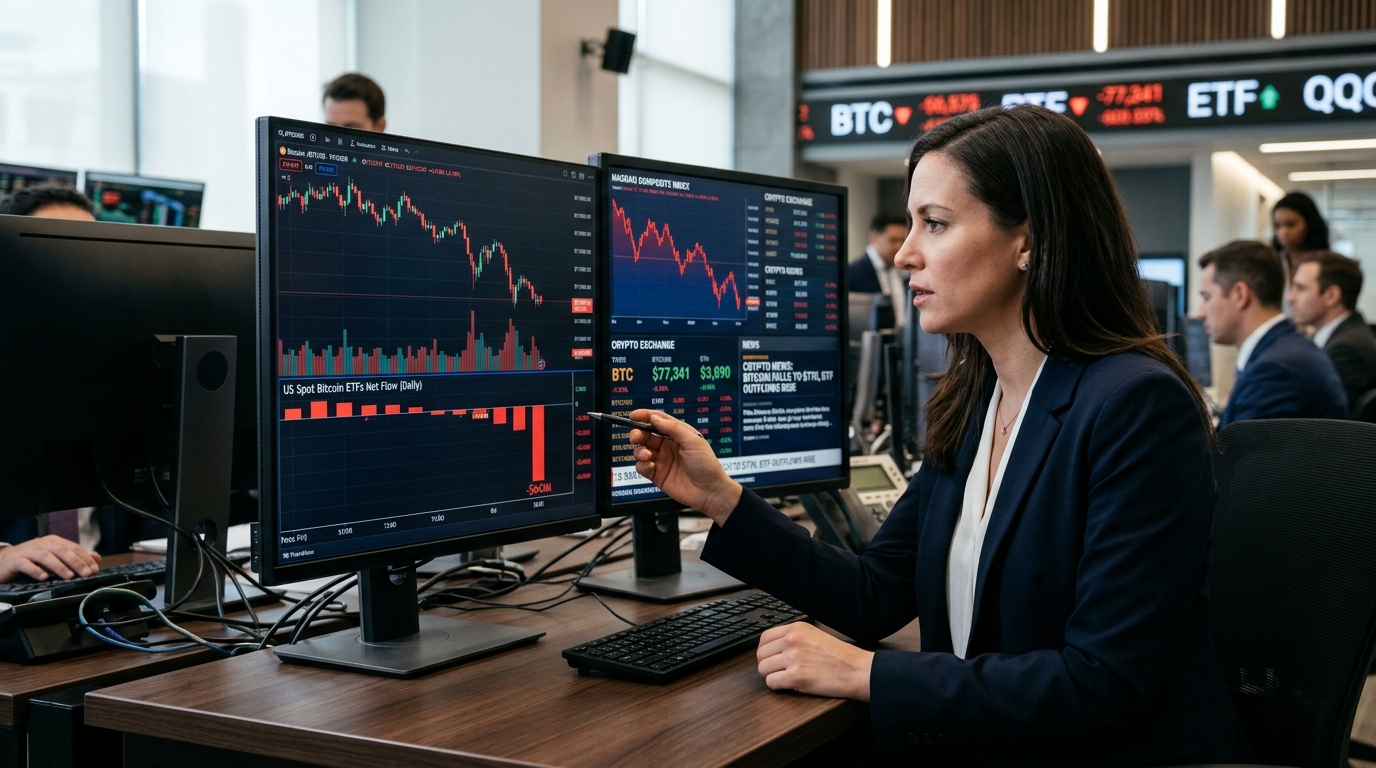
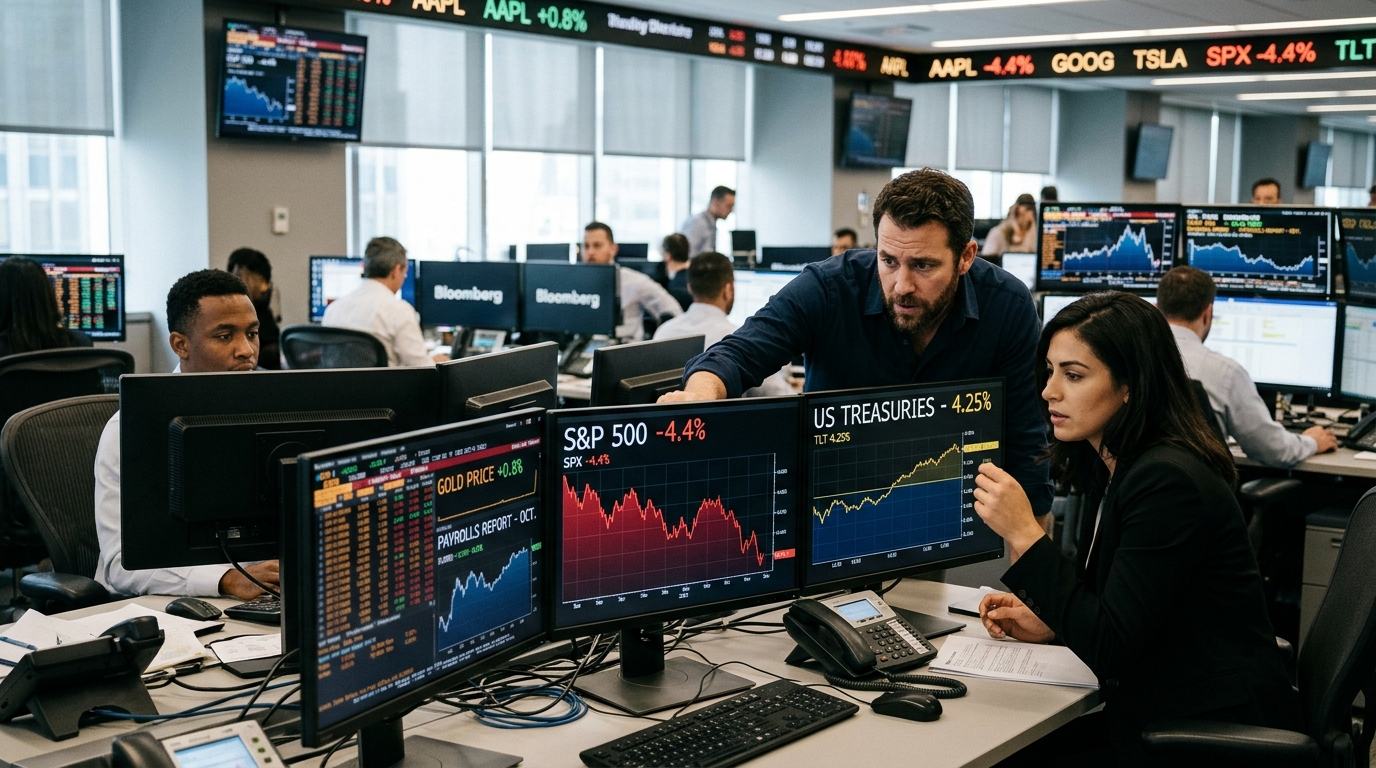
Yesterday was a stress test nobody scheduled. The Nasdaq 100 sank 6.4%, and the S&P 500 tumbled 4.4% for its worst day since April 2025. Investors were gripped by fear that Democrats, after sweeping both chambers in Tuesday’s midterm elections, will slow the data-center buildout that powered the AI trade. Every major index fell hard. Almost every asset fell with them.
Almost.
The rally in U.S. government bonds sent yields down across maturities, with the 2-year down about 12 basis points on the day. The 10-year yield closed near 4.84%, and the U.S. Dollar Index edged up about 0.12%. Gold, the asset most investors reach for first when equities break, closed up about 0.8%, a rounding error on a day when chip stocks lost double digits. Gold edged higher while silver slipped, as investors sought safety in bullion but sold the industrial metal on growth worries. The precious metal was not a hedge Thursday. Treasuries were.
What the Bond Market Is Pricing Now
The move into duration reflected more than fear. It reflected a genuine shift in how markets are viewing Fed policy into the December 8-9 meeting. As of this morning, rate futures still lean toward a quarter-point hike, but the odds are lower than they were immediately after the Fed’s October 28 hold. Expectations for a December hike have also softened in the wake of the midterm results, with prediction markets showing a similar drift lower.
That compression is what drove bonds higher. The 2-year Treasury yield is one of the market’s clearest reads on where the Fed is heading, and when December hike odds fall sharply in a week, 2-year yields tend to fall with them. The question now is whether today’s jobs number reverses that trade before the open.
What Payrolls Could Do
Economists are looking for a nonfarm payrolls gain of about 65,000 in October, up from the 29,000 jobs produced in September. Surveys also expect the unemployment rate to remain at 4.2%.
The ADP report released Wednesday showed private sector companies added 86,000 jobs in October, little changed from the prior month. That beat estimates but ADP and the BLS regularly diverge, sometimes by wide margins in a single month. Economists generally view ADP as unlikely on its own to decide the Fed’s December decision, which markets still see as most likely a quarter-point hike. The complication is that Thursday’s flight into Treasuries has already done some of the work of a soft reading. If October payrolls land closer to 90,000 or above, the bond rally can unwind fast and December hike odds can climb. If they come in closer to 50,000 or below, the yield move can deepen and duration can extend its lead over gold as the portfolio hedge of the moment.
Building Wealth Around Duration
Thursday’s session makes the portfolio case clearly: in a sharp, fear-driven equity selloff, intermediate and long Treasuries provided cushion that neither gold nor cash equivalents matched. The 10s-2s spread is the most watched recession signal in fixed income, and based on Treasury’s Nov. 5 curve it sits at roughly 38 basis points, meaning the curve has steepened as short rates fell faster than long ones, a classic bull steepening when rate-hike odds recede.
For investors building a portfolio designed to withstand volatility, the lesson from Thursday is not to abandon gold but to size duration properly alongside it. A position in 7- to 10-year Treasuries, or in an ETF such as IEF, delivered actual protection when equity markets broke. Gold rose, but not enough to matter. If payrolls disappoint this morning and December hike odds fall further, that Treasury position gains again. If payrolls surprise to the upside, yields rise and that position pulls back, but the Fed’s tightening cycle then has a clearer end date, which is ultimately good for equities and reduces the need for defensive duration anyway.
Risks to Monitor
The Fed is still divided. At its October 28 meeting, the Fed held at 3.75% to 4%, and two voters dissented in favor of raising rates immediately. A strong payrolls number today returns pricing power to the hawks and could push December hike probability higher, which would pressure the long end of the curve and reverse Thursday’s bond gains. The other risk is that the jobs number lands soft and December is priced out entirely, leading the Fed to push back hard in its communications and spark a sell-the-news reaction in bonds.
Daily Wealth Takeaway
The asset that protects a portfolio in a crisis is rarely the one that gets the most attention beforehand. Thursday proved it: when the AI trade broke and the S&P 500 shed more than four percent in a single session, U.S. Treasuries did the job. Sizing duration in a portfolio is not a bet on recession. It is recognition that rate-sensitive government bonds remain the most reliable counterweight to equity risk, especially when the Fed is still debating its next move.