Chevron’s Refineries Are Doing What Its Oil Wells Can’t
Refining, not crude output, drove a 185% jump in adjusted EPS.
Most energy investors watch crude prices and Permian well counts. After Chevron’s third-quarter 2026 results, released today, the more instructive number sits in the refining segment.
Chevron reported adjusted earnings per share of $5.28, beating the Wall Street consensus of $4.78. The bottom line surged 185% from the year-ago adjusted profit of $1.85 per share. That recovery is real, but the source of it matters enormously for how investors should think about the stock going forward.
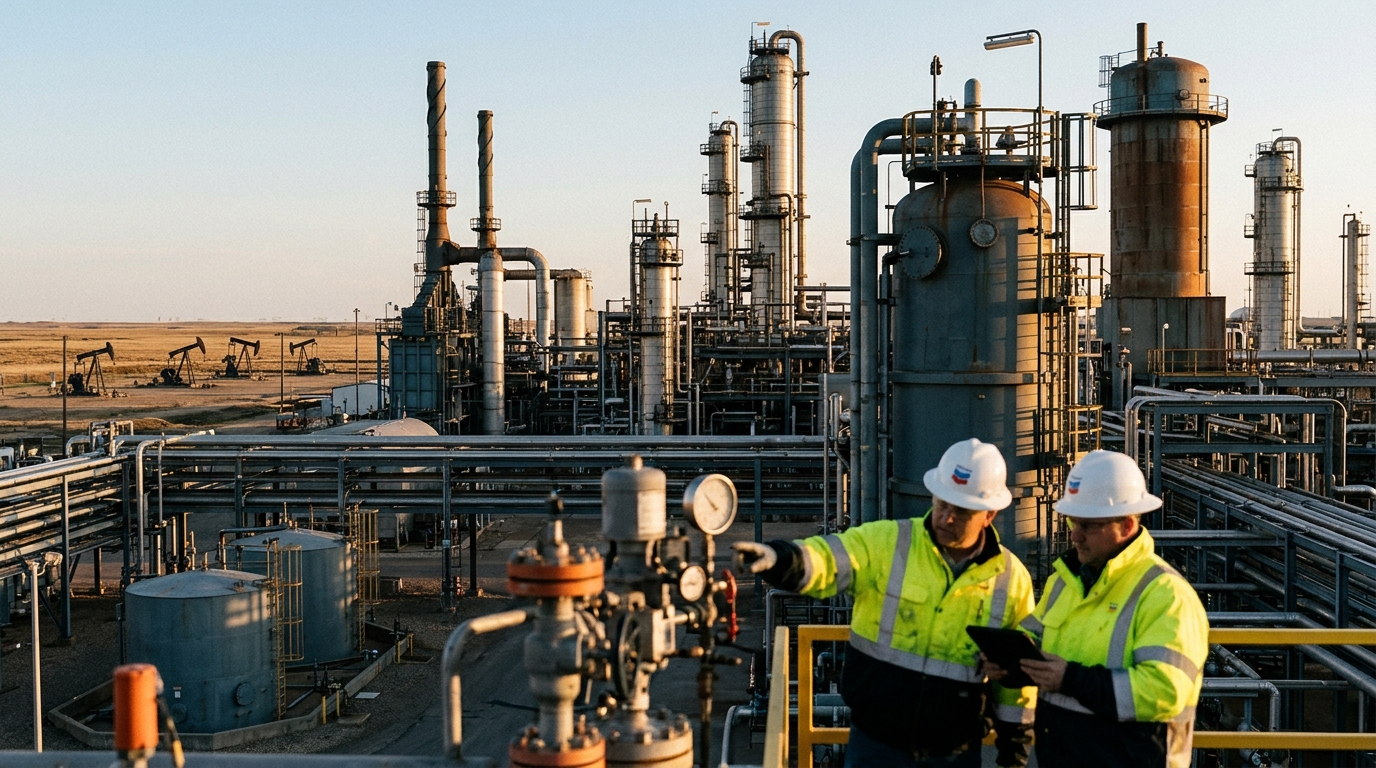
Chevron’s downstream operations recorded earnings of $4.9 billion, compared with $1.1 billion a year earlier, with the improvement primarily reflecting stronger margins on refined product sales. U.S. refineries achieved record crude oil throughput of 1.09 million barrels per day, with utilization rates near 98%. That is not a Permian story. That is a refinery story.
The upstream picture is more complicated. Production in the third quarter was slightly higher than a year ago, even as Chevron pointed to factors like lower entitlements from higher prices and impacts tied to conflict in the Middle East. The quarter also included one month of Venezuela production after a change to equity accounting.
On capital spending, the company is pulling back rather than pushing forward. Capital expenditures fell to $4.0 billion from $4.5 billion a year earlier, reflecting reduced spending in the Permian Basin. Chevron said it expects fourth-quarter spending to rise from third-quarter levels, while still finishing 2026 at the low end of its annual capital-spending guidance. The full 2027 budget is being held until after a December board meeting, meaning investors are trading on incomplete information about next year’s growth trajectory.
The balance sheet strengthened sharply. Chevron reported net debt of $20.7 billion at the end of the third quarter, down from $34.5 billion at the end of 2025. Chevron also returned about $6.0 billion to shareholders during the quarter, including $3.5 billion in dividends and $2.5 billion in share repurchases.
The shareholder return story is not unique to Chevron. ConocoPhillips also doubled its adjusted EPS in Q2 and is returning 45% of cash from operations in 2026.
Venezuela adds an asymmetric variable. Management has said it is targeting about 600,000 barrels per day from Venezuelan joint ventures by 2031, and that Venezuela is already free-cash-flow positive, with total costs below $20 per barrel. The upside is real. So is the sanctions risk, which has moved unpredictably before and could again.
The key insight from this quarter is that Chevron’s earnings engine is more integrated than the upstream-focused framing suggests. When refining margins are wide and utilization is near 98%, the downstream effectively subsidizes any softness in oil realizations. That flexibility is worth something. Chevron has also reported 39 consecutive years of dividend increases, a record that constrains management’s ability to sacrifice the payout even in weaker commodity environments.
The regulatory environment remains the swing variable. General License X showed how quickly a single Treasury action can reprice both XOM and CVX regardless of operating performance.
Income investors holding CVX for that dividend have a stronger case today than they did a year ago. Growth investors wanting to see capital deployed aggressively into new barrels will need to wait for December.