
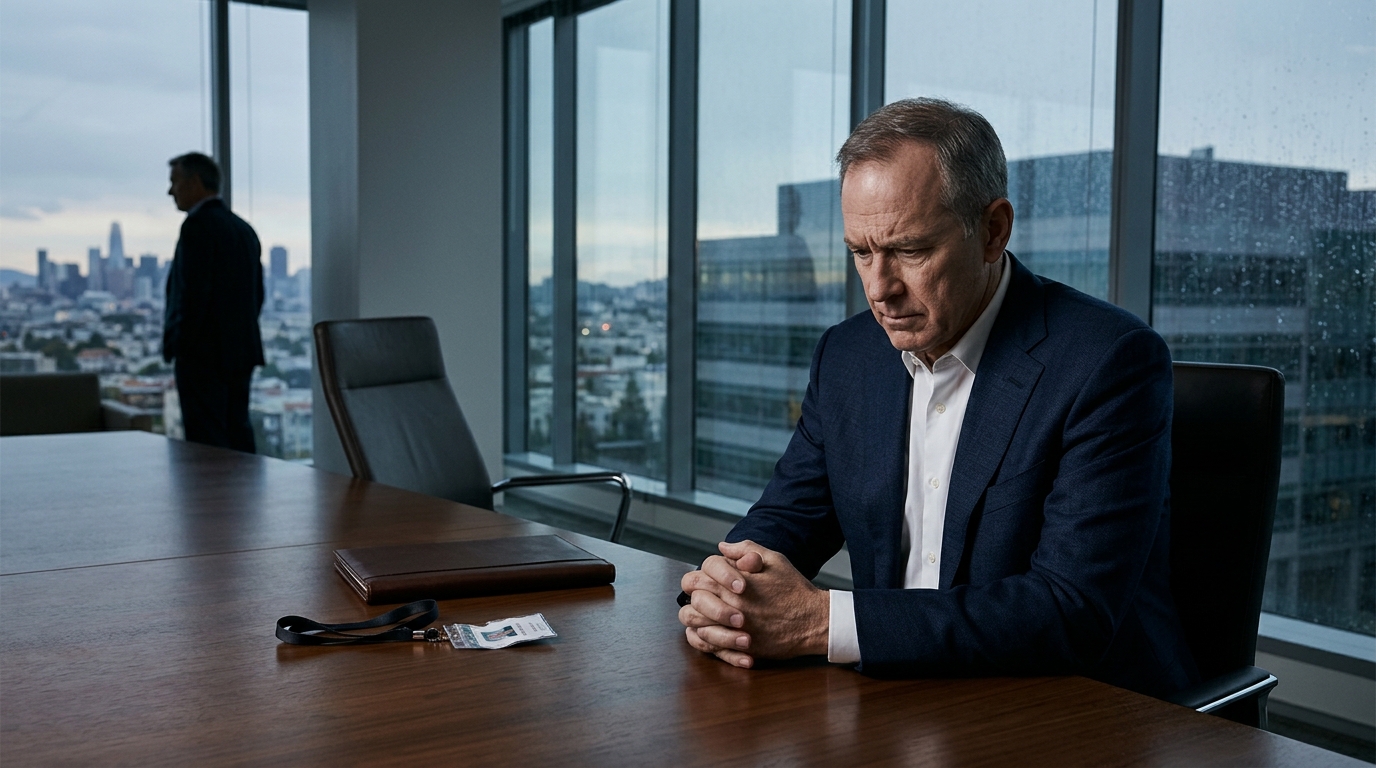
Nvidia lost more than $600 billion in market value this week after reports surfaced that Jensen Huang had extramarital affairs with two women, including a businesswoman U.S. intelligence officials have identified as a suspected Chinese intelligence asset. The board is now weighing his future. But the scandal itself is almost beside the point for investors. The deeper problem is what the crisis exposed: there is no obvious bench of talent who can quickly be tapped to replace him.
Huang holds the positions of co-founder, president, and chief executive, with more than 60 executives reporting directly to him. That is not an oversight. It is a deliberate structural choice that has now become a liability priced in real time.
The valuation math is stark. Dan Ives of Yorkville Ives estimated that if Huang were removed, Nvidia is worth 25% to 30% less as a company, and that his departure would create a dramatically different competitive environment around AI GPUs globally. At Nvidia’s recent market cap, that range represents hundreds of billions of dollars hanging on one person’s employment status.
What makes the succession question so hard is that Huang’s value is not primarily technical. He takes technologies his engineers believe are possible and turns them into products the whole company commits resources to, takes risks on, and has to deliver. That is a decision-making skill, not a chip architecture. It cannot be transferred in a transition binder.
If Huang is ousted, longtime CFO Colette Kress has been widely cited as a likely interim CEO, though an extended interim tenure would only increase uncertainty about Nvidia’s direction. Other names floated in media coverage and market chatter include Apple’s chief hardware officer Johny Srouji and Arm CEO Rene Haas. None of them know Nvidia’s customer relationships or product roadmap the way Huang does.
The succession uncertainty also ripples into Nvidia’s partner ecosystem. Marvell Technology’s recent surge was built almost entirely on Huang’s personal endorsement and a deepening commercial relationship with Nvidia.
One analyst noted that Huang has played a central role in mobilizing funding for the AI buildout, helping other companies afford to buy his chips, and that the cost of capital may rise for future investments if the most prominent CEO in the AI landscape is no longer orchestrating such deals. That is the second-order risk Wall Street is only beginning to price.
“The market is starting to price Nvidia without its founder as the likely scenario, rather than a tail risk,” said Armina Rosenberg, cofounder of Minotaur Capital, which holds Nvidia shares. That framing matters. When a low-probability event becomes a base case, the multiple compression tends to overshoot.
Multiple compression is especially painful when the underlying growth case remains intact. Nvidia’s forward valuation had already been trading at a steep discount to its own earnings trajectory before the scandal surfaced.
The Apple analogy gets cited often. Apple kept growing after Steve Jobs died, and Uber has thrived since founder Travis Kalanick resigned under pressure in 2017. Both are real precedents. Neither company was the sole critical supplier to an industry spending trillions of dollars on a technology cycle that had not yet peaked.
Nvidia’s chips remain indispensable regardless of who signs the org chart. Core fundamentals are expected to remain strong, but finding a successor with the same strategic vision will be challenging. For long-term holders, the question is whether the multiple they are paying today already reflects that leadership risk, or whether the market still has further to adjust for it.