Most vertical software companies spend years building toward a moment when their platform becomes the operating system of an industry. Toast appears to have arrived. What matters now is whether investors are pricing the right version of the company.
The Q3 results released November 3 were strong by any honest reading. ARR rose 24% to $2.5 billion, total locations climbed 21% to roughly 189,000, and gross payment volume increased 20% to $61.8 billion. Subscription gross profit grew 36%, and SaaS gross margin expanded 320 basis points from a year ago. The EPS miss that sent shares down nearly 5% after hours obscures something more consequential happening underneath.
Toast is converting its payments flywheel into a software margin story, and the mechanism is AI. CEO Aman Narang noted that recurring gross profit streams grew 27% while GAAP operating income margin reached 26%, adding that the company launched Toast IQ Team to move “beyond tools that help operators run their business toward agents that take on the work for them.”
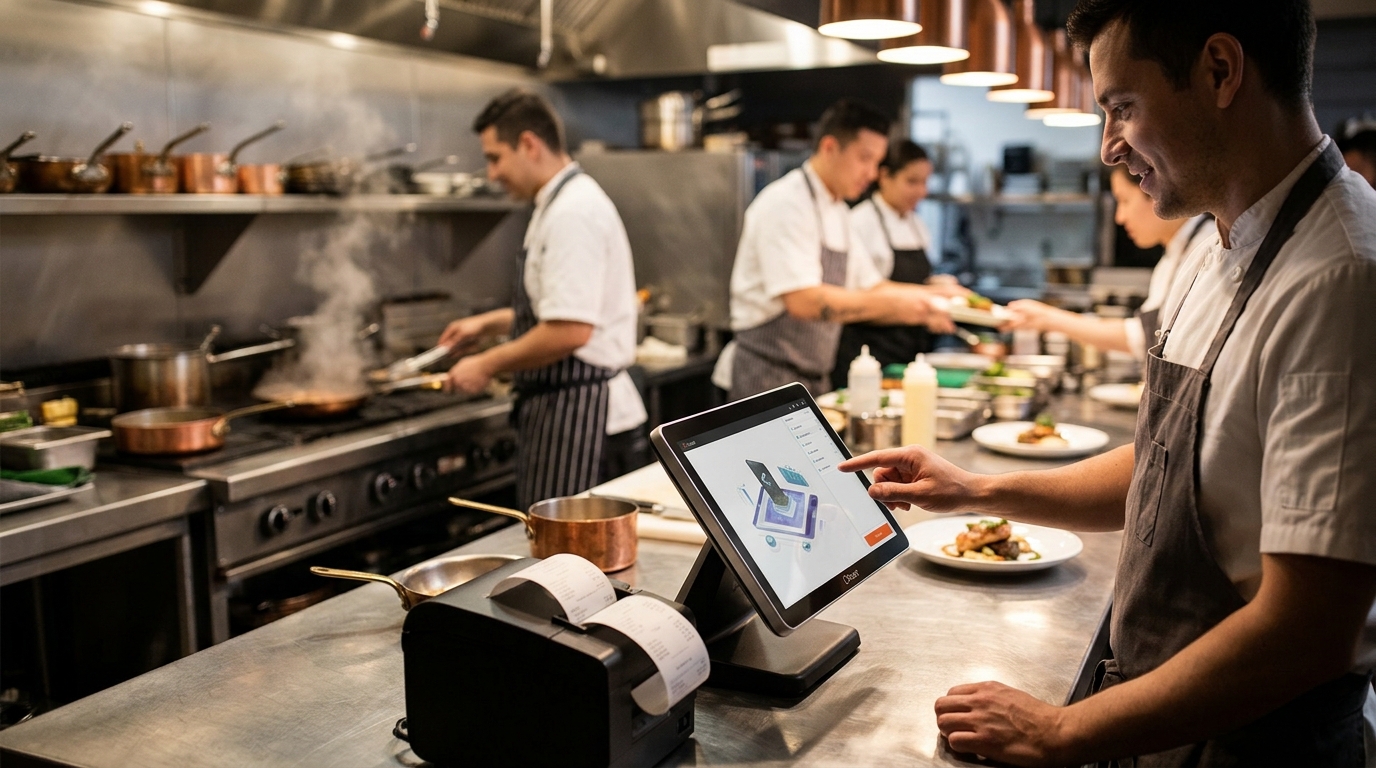
Toast IQ Team targets scheduling and staffing, while Toast IQ Grow now includes an SEO agent, a reviews agent, and an offers agent designed to help restaurants increase visibility and deploy targeted promotions. These are not dashboards. They are autonomous workflows layered directly on top of the payment and subscription infrastructure Toast already owns. Early data from IQ Team showed some restaurants cutting overtime hours by 41%. That is a figure a restaurant owner can calculate into dollars within minutes.
The pattern of layering autonomous agents onto existing software infrastructure is not unique to restaurants. Salesforce’s Agentforce crossed $1.5 billion in ARR growing over 240% year over year, built entirely on top of its existing CRM platform.
Toast’s total take rate, measured as recurring gross profit as a percentage of gross payment volume, reached 104 basis points in the quarter, six basis points above the prior-year period. Every AI product that deepens engagement widens that take rate. The compounding effect is structural, not promotional.
International, enterprise, and retail businesses are nearing $200 million in ARR and are expected to double for a second consecutive year, which matters because the domestic restaurant market, where Toast estimates it holds roughly 20% share, is not the ceiling. It is the foundation.
The same logic is playing out in e-commerce. Shopify is pursuing an identical strategy of owning the transaction layer beneath AI-driven discovery, turning agentic commerce into a payments business.
The restaurant management software market was valued at approximately $6.54 billion in 2025 and is projected to reach $14.73 billion by 2031, driven by cloud adoption. Legacy players still hold close to half the market, effectively acting as share donors as their customers migrate toward modern platforms.
The risk worth watching is margin consistency. Toast raised its full-year adjusted EBITDA guidance to $840 million to $850 million, but the EPS miss signals that investment in the agentic platform is running ahead of monetization. That is not necessarily a problem. It becomes one if adoption of IQ products stalls before they reach meaningful ARR scale.
The monetization lag is not unique to Toast. HubSpot’s experience shows how a pricing model transition can suppress customer-addition metrics even when the underlying product strategy is sound.
The practical takeaway for long-term investors: Toast’s payments volume is the moat, its software layer is the margin engine, and AI agents are the multiplier. That sequence is exactly what compounding looks like before the market agrees on the valuation.